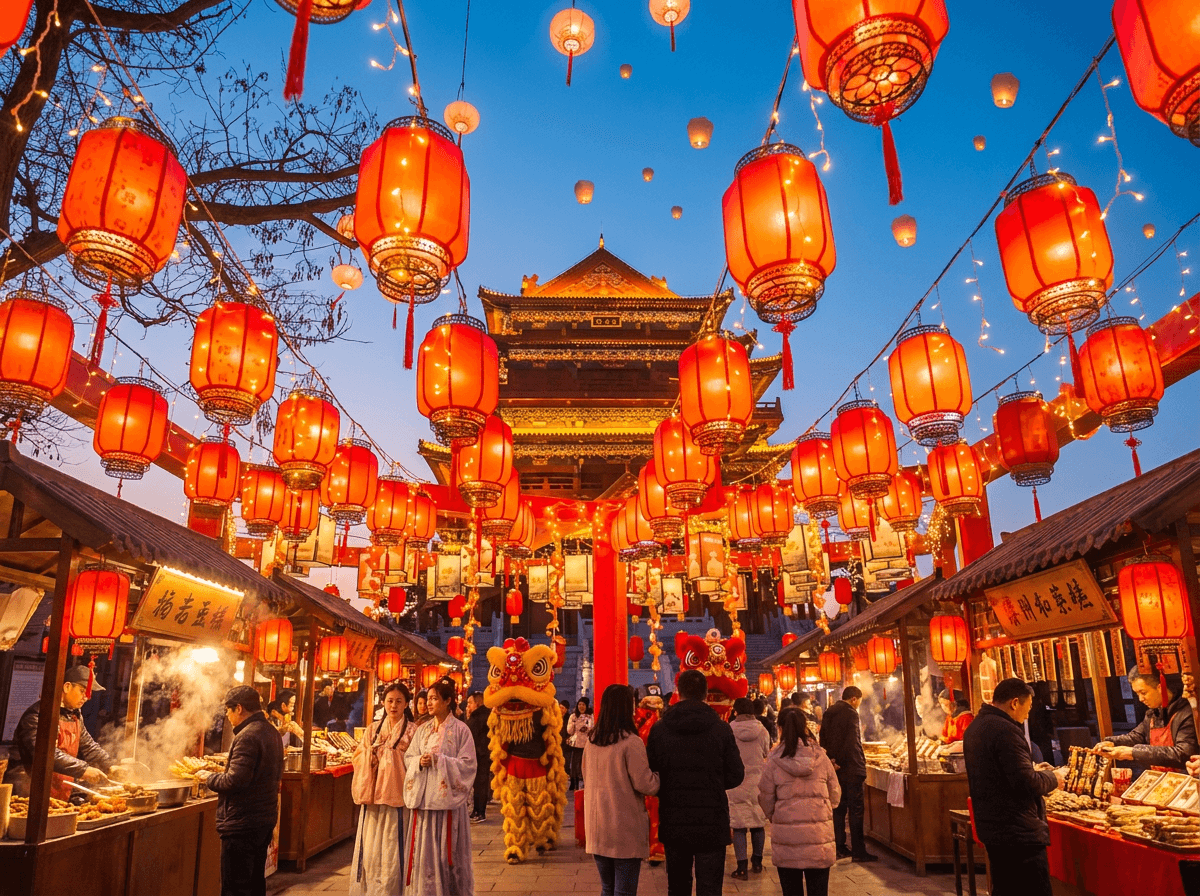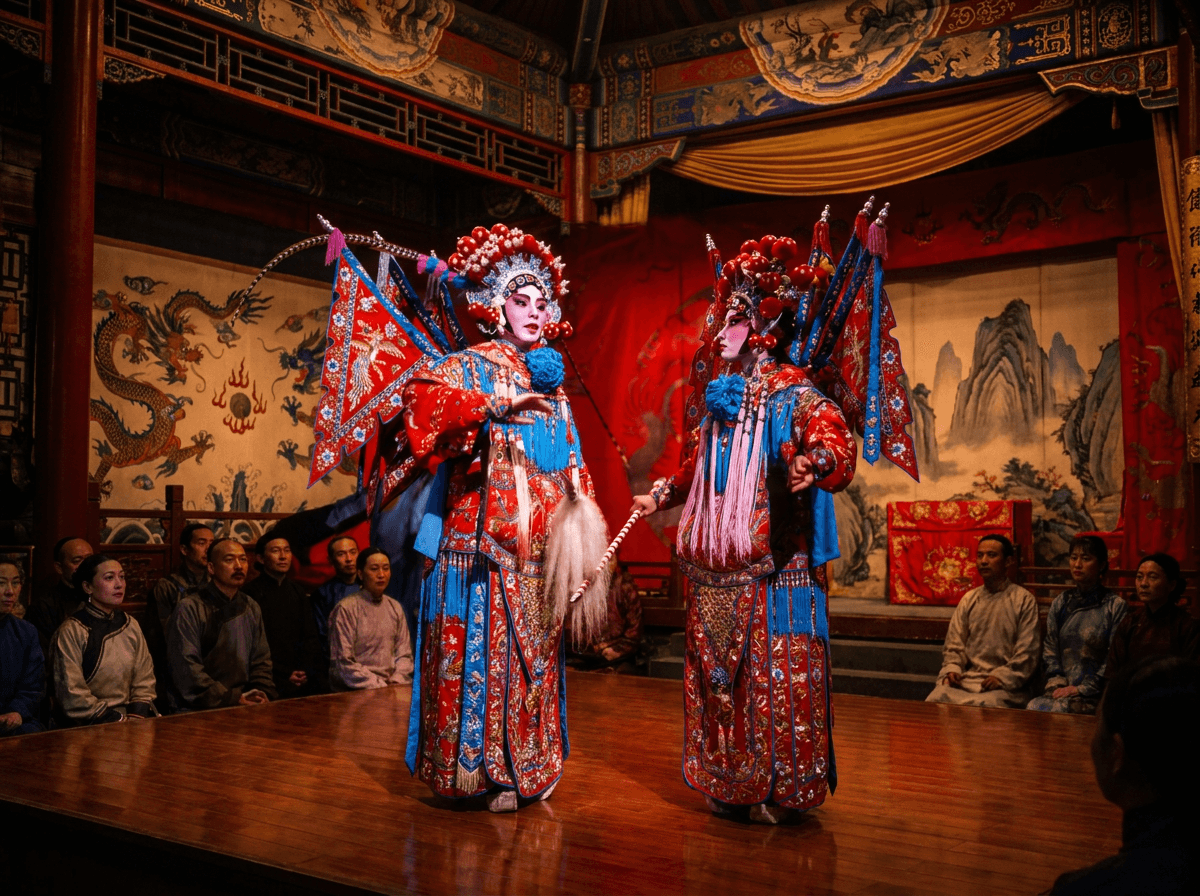
Chinese opera rarely makes it onto a first-time visitor's itinerary, overshadowed by temples, walls, and pandas. That omission overlooks two performance traditions still very much alive today, staged nightly in theaters that have hosted audiences for centuries. This guide covers where to actually see China's living opera traditions in person, focusing on Peking Opera in Beijing and Sichuan Opera's face-changing act in Chengdu. Both are easy to book, run under two hours, and fit into a single evening without reshuffling the rest of a trip.
Peking Opera's Visual Language
Peking Opera combines singing, acrobatics, elaborate costume, and stylized movement into a performance style that developed in Beijing during the late eighteenth century. Actors communicate character and emotion through a codified visual language, where face paint, gestures, and vocal register carry as much meaning as the sung dialogue itself.
Color plays a specific role throughout every performance. Red face paint typically signals loyalty and courage, white suggests cunning or villainy, and black often marks a bold, upright character. Audiences familiar with these conventions read a performer's role within seconds of their entrance, long before any dialogue clarifies the plot.
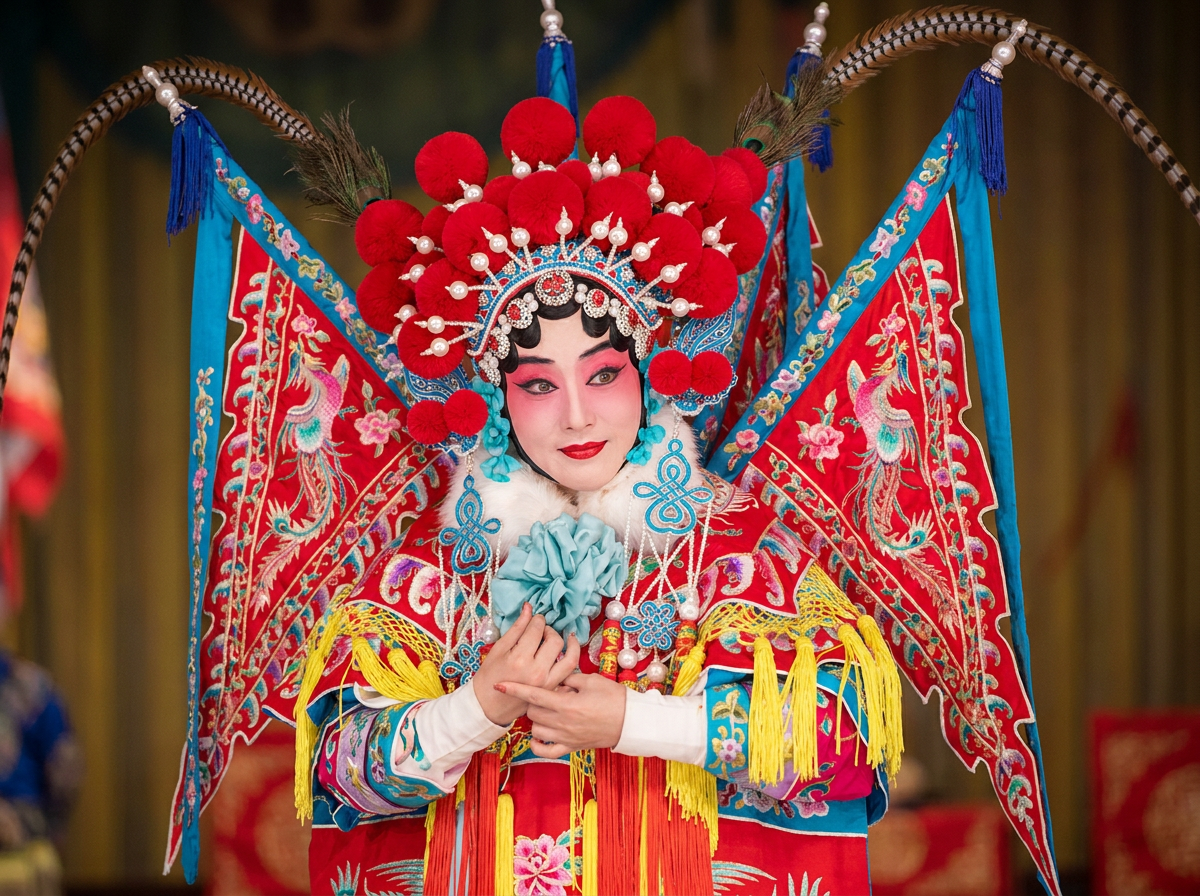
How Peking Opera Tells a Story
Storylines usually draw from historical legend, folklore, or classical literature, condensed into excerpts rather than full-length narratives during most tourist-oriented shows. This format lets visiting audiences experience several distinct scenes and character types within a single evening, rather than sitting through one lengthy continuous story.
Instrumentation adds another layer. A small ensemble typically includes stringed instruments alongside percussion, with cymbals and drums often punctuating dramatic gestures or fight sequences. The combined effect can feel unfamiliar to first-time viewers, though most theaters catering to tourists provide English subtitles or program notes.
Peking Opera survived political upheaval throughout the twentieth century, including periods when traditional performance faced serious restriction. Its continued presence in Beijing today, performed nightly across several historic venues, reflects a deliberate effort to keep this living opera tradition genuinely alive rather than preserved only in museums.
Historic Theaters Behind Beijing's Living Opera Scene
Several historic venues across Beijing stage Peking Opera performances specifically designed for visiting audiences. Liyuan Theatre, located inside the Qianmen Jianguo Hotel, ranks among the most established options, offering nightly shows with English subtitles and traditional seating around square tables where visitors can drink tea throughout the performance.
Huguang Guild Hall offers a different atmosphere entirely. Built more than two centuries ago and recognized as one of the world's great wooden theaters, this venue combines a working stage with an on-site museum, giving visitors historical context alongside the performance.
More Beijing Venues Worth Booking
Zhengyici Theatre adds even more age to the experience, standing among Beijing's oldest surviving theater buildings. Its smaller scale creates a more intimate setting than the larger tourist-oriented venues, appealing to visitors who prefer a quieter encounter with Peking Opera.
Mei Lanfang Grand Theatre takes a more contemporary approach, named after one of Peking Opera's most celebrated performers. Modern acoustics and comfortable seating make this venue appealing for visitors who want polished production values alongside the same underlying art form.
Booking ahead matters at every venue, particularly during peak tourist season when tour groups fill much of the available seating. Arriving early also lets visitors watch performers apply their elaborate makeup backstage, an option some theaters offer before the show begins.
Sichuan Opera's Face-Changing Secret
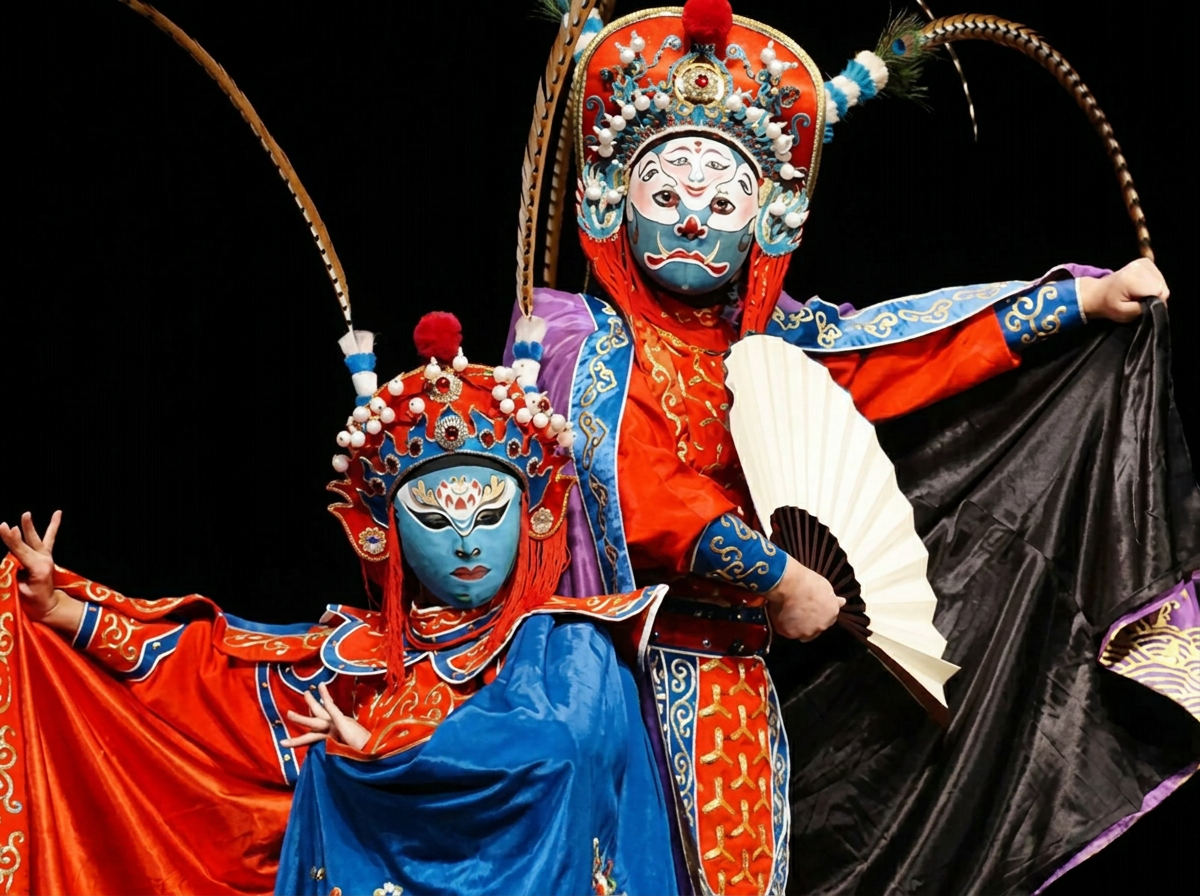
Sichuan Opera developed roughly three centuries ago, blending several regional operatic styles into a single tradition centered on Chengdu. Beyond singing and acrobatics, the art form incorporates comedic performance, fire-breathing, and its most famous element: bian lian, or face-changing.
During this technique, performers swap painted silk masks in a fraction of a second, sometimes switching through half a dozen faces during a single sequence. Exactly how performers accomplish this remains a closely guarded secret, traditionally passed down through strict apprenticeship within specific opera families rather than taught openly.
Why the Mystery Still Holds
Each mask corresponds to a different emotional state or plot development, letting a single performer convey rapid shifts in mood without pausing the action. Originally a narrative device, the technique gradually became a spectacle in its own right, now serving as the highlight of nearly every Sichuan Opera performance staged for visitors.
Historically, only male performers learned this technique, and strict secrecy still surrounds the mechanics behind the mask swaps today. Modern performances rarely explain the method on stage, preserving the mystery that has defined this living opera tradition for generations rather than reducing it to a simple magic trick. Combined with rolling-lamp balancing acts and fire-spitting sequences, face-changing gives Sichuan Opera a distinctly different character from the more measured pacing found in Peking Opera further north.
Chengdu's Best-Known Opera Teahouses
Shufeng Yayun Teahouse ranks as Chengdu's most established venue for experiencing face-changing firsthand. Operating for more than a century inside Chengdu Cultural Park, this teahouse-style theater pairs nightly performances with tea service, letting visitors settle in for an evening that blends theater with a genuinely local ritual.
Jinjiang Theater offers a more centrally located alternative, sitting near Chunxi Road in the heart of downtown Chengdu. As one of the city's oldest theaters, it presents comprehensive Sichuan Opera programs that combine face-changing with acrobatics, live music, and elaborate costume changes throughout a single show.
More Chengdu Venues Worth Booking
Shunxing Old Teahouse takes a slightly different approach, located on the upper floor of a modern exhibition center rather than a historic building. Despite its contemporary setting, the performances follow the same traditional format, often paired with hotpot dining for visitors looking to combine two distinctly Sichuan experiences in one evening.
Sichuan Opera Theater, the province's professional company, stages full-length productions in downtown Chengdu that go beyond the condensed tourist format found elsewhere. Visitors interested in the broader art form beyond face-changing alone often find this venue offers a more complete introduction to the tradition.
Booking through a hotel concierge or reputable local agency generally secures better seating than walking up without a reservation, particularly during Chengdu's busier travel months.
Conclusion
Both Peking Opera and Sichuan Opera continue performing nightly for audiences willing to seek them out, rather than surviving only as museum artifacts or historical footnotes. Beijing's wooden theaters preserve a codified visual language built around color and gesture, while Chengdu's teahouses guard a masked transformation trick that has kept audiences guessing for centuries. Book one evening in each city, sit close enough to see the makeup and the masks up close, and decide for yourself which tradition earns the bigger reaction from the crowd around you.