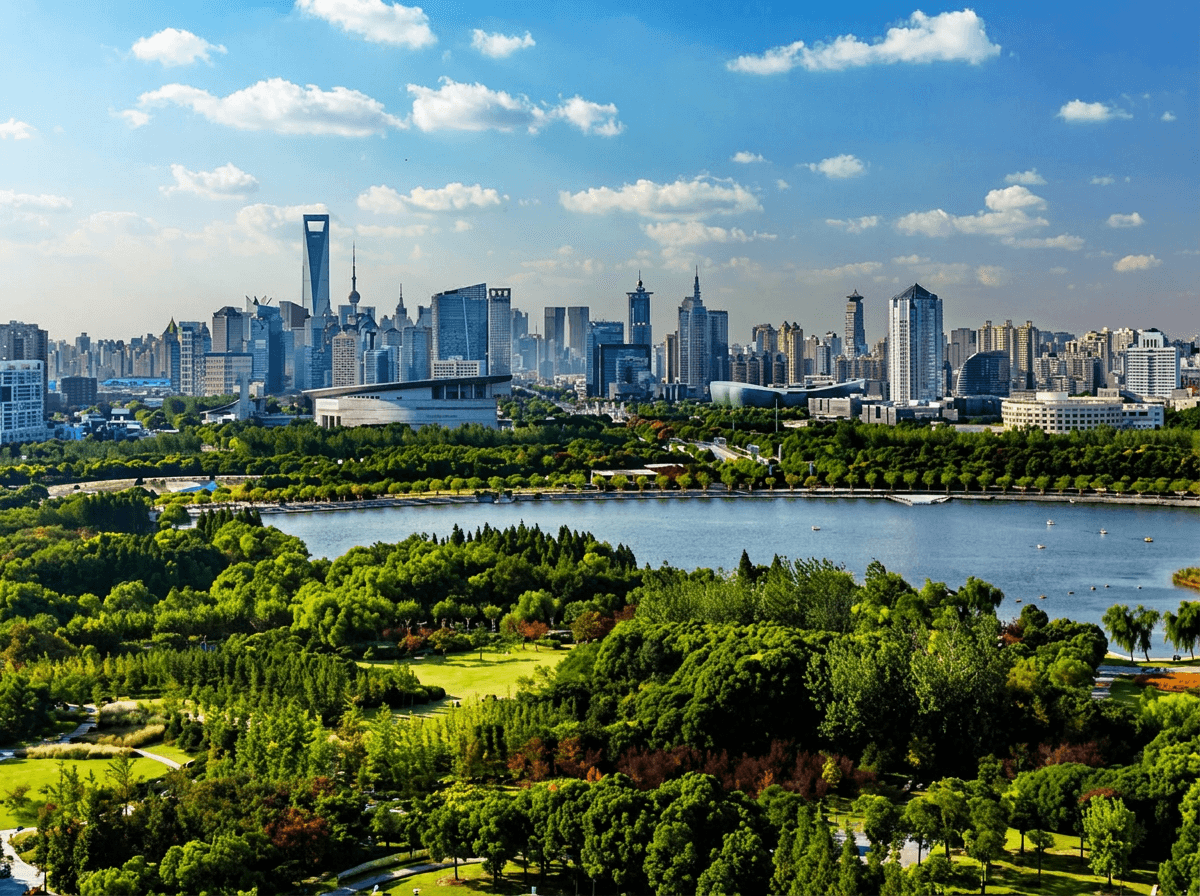
Shanghai's skyline gets most of the attention in travel photography, but Century Park offers a genuine break from all that glass and steel. Sitting in the Pudong New Area, Century Park spans 140 hectares of lawns, lakes, and woodland, making it the largest park inside Shanghai's Inner Ring Road. This guide walks through what Century Park actually offers, from its origins as a millennium project to the specific zones worth building a visit around.
Scale and Origins
Century Park takes its name from Century Avenue, the wide boulevard running toward it through central Pudong. British environmental consultancy LUC designed the park, and construction ran from 1996 to 2000, timed deliberately to finish at the start of the new millennium.
That scale sets Century Park apart from most urban green spaces in China. At 140 hectares, roughly 350 acres, it dwarfs many comparable city parks and functions as Shanghai's answer to something like Central Park in New York, minus the density of surrounding buildings pressing directly against its edges.
Nearly 100,000 trees grow across the grounds, alongside expansive lawns that fill with picnicking families and kite-flyers on clear weekends. The sheer size means visitors rarely feel crowded here, even on busy days, since the park's paths and open lawns spread activity across a much larger footprint than smaller downtown alternatives.
Location matters too. Century Park sits close to the Shanghai Science and Technology Museum, making it easy to combine both stops into a single day trip through this part of Pudong. The surrounding neighborhood has grown up considerably since the park's construction, though the green space itself has stayed a fixed, protected anchor point.
Two decades after opening, Century Park remains a deliberate contrast to Shanghai's more famous districts. Where the Bund and Nanjing Road pack in commerce and crowds, this park offers something closer to breathing room, built specifically to give the city's residents somewhere to escape density rather than participate in it.
Mirror Lake and the Landscape
Mirror Lake anchors the western section of Century Park and ranks as the largest artificial lake in Shanghai. Covering roughly 13 hectares and reaching nearly five meters at its deepest point, the lake dominates views across much of the park's western half.
Boat rentals let visitors move across the water directly, offering a different vantage point than the walking paths that circle the shoreline. A water lock on the lake's eastern edge manages water levels, keeping the surface consistently calm enough for reflections of the sky and surrounding trees.
The Century Flower Clock sits near the lake's edge and functions as one of the park's recognizable landmarks. Seasonal flowers form the clock face itself, while the timing mechanism runs on satellite synchronization accurate to a fraction of a second, an odd but memorable detail for a feature built mostly from plants.
Landscaping throughout Century Park blends several design traditions rather than sticking to one approach. British, Japanese, and Chinese garden styles all show up across different sections, giving the park a varied character depending on which path a visitor happens to follow.
This mix reflects the ambitions behind the original design. Rather than building a single cohesive garden style, planners aimed for variety across Century Park's different zones, letting visitors experience several distinct landscape traditions within one connected green space.
The Seven Zones
Planners divided Century Park into seven distinct sections, each built around a different theme. The Lakeside Scenic Area surrounds Mirror Lake directly, while the Forest Landscape Area offers denser tree cover and quieter walking paths further from the water.
The Amenity Grass section provides wide open lawns, ideal for picnics, casual sports, or simply stretching out on a clear afternoon. Nearby, the Nature Reserve area supports birdlife and denser vegetation, appealing to visitors interested in a quieter, more ecological corner of the park.
A Folk Village section adds cultural texture to Century Park, incorporating structures and design elements meant to evoke traditional Chinese village architecture. The Exotic Zone leans in a different direction entirely, featuring plants and landscaping styles drawn from beyond China's borders.
Rounding out the seven areas, a mini golf course gives families and casual visitors something more structured to do beyond walking and picnicking. This variety means Century Park functions differently depending on which section a visitor spends time in, shifting from quiet nature reserve to active recreation space within a short walk.
Eight gates provide access around the perimeter, with five open to the public at any given time. Choosing an entrance strategically, based on which zone interests a visitor most, can save considerable walking compared to entering randomly and navigating toward a specific target afterward.
Getting There and Practical Tips
Shanghai Metro Line 2 offers the most direct route into Century Park, stopping at a station of the same name right beside the park's main entrance. Lines 7 and 9 also reach nearby stations, giving visitors coming from different parts of the city several practical route options.
A modest entrance fee applies, historically kept low enough to encourage regular use by nearby residents rather than functioning as a significant tourist toll. Checking current pricing before a visit remains sensible, since fees at Chinese public parks do shift periodically.
Early morning visits tend to reward visitors with the calmest atmosphere, before the day's heat and crowds build up. Local residents often use the park for morning exercise, so arriving early also means witnessing a slice of everyday Shanghai life alongside the scenery itself.
Weekends bring noticeably larger crowds than weekdays, particularly around Mirror Lake and the main lawns. Visitors hoping for a quieter experience should consider a weekday visit if their schedule allows that flexibility, since the difference in foot traffic between the two can be substantial.
Comfortable walking shoes make sense given the park's size, since covering even a few of its seven zones in a single visit involves considerably more walking than a smaller city park would require.
Conclusion
Most visitors to Shanghai budget an hour or two for parks, if that. Century Park is large enough, and varied enough across its seven zones, to justify blocking out half a day instead. Mirror Lake, the flower clock, and the mix of garden styles scattered throughout give it more to actually do than a quick lawn-and-bench stopover between the Bund and Nanjing Road. Bring a book, rent a boat, or just walk until one of the zones catches your attention. The park stays open long enough to fit whichever version of that afternoon you end up wanting.