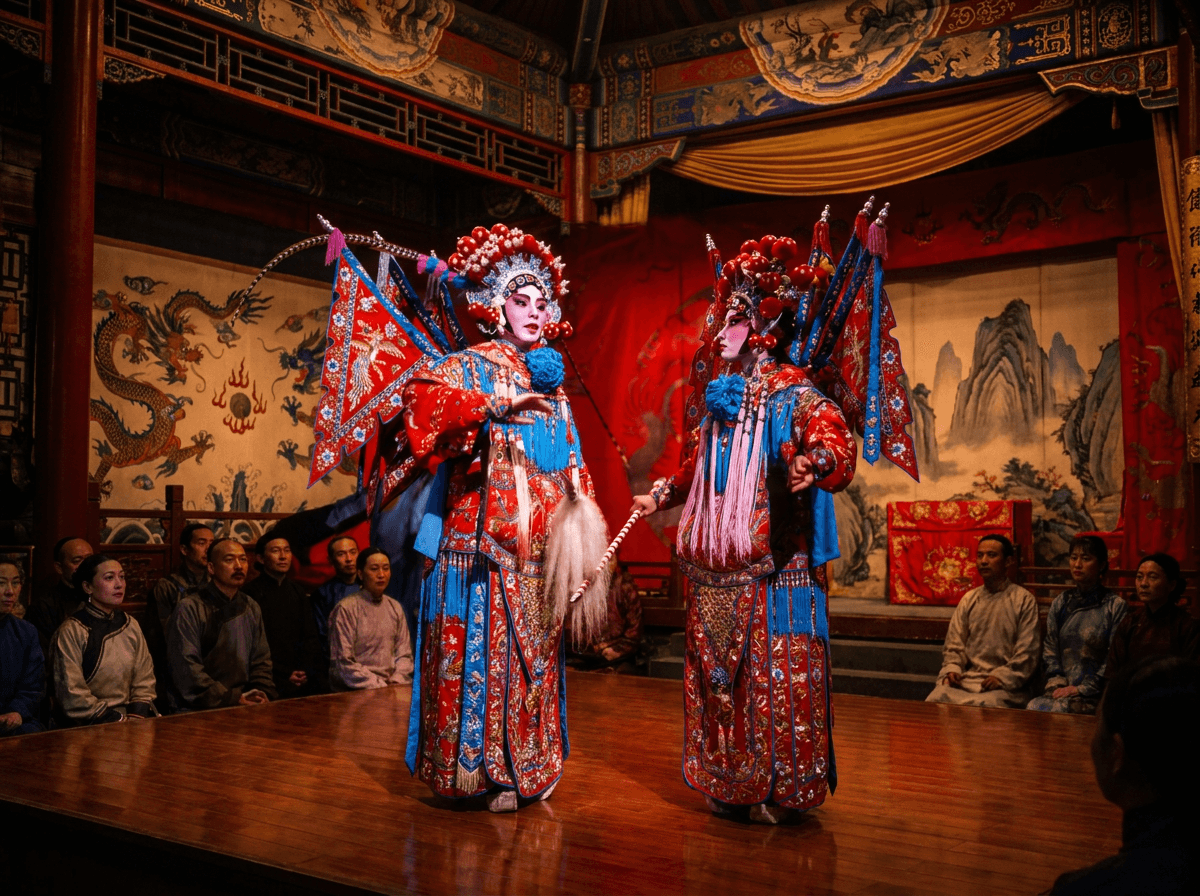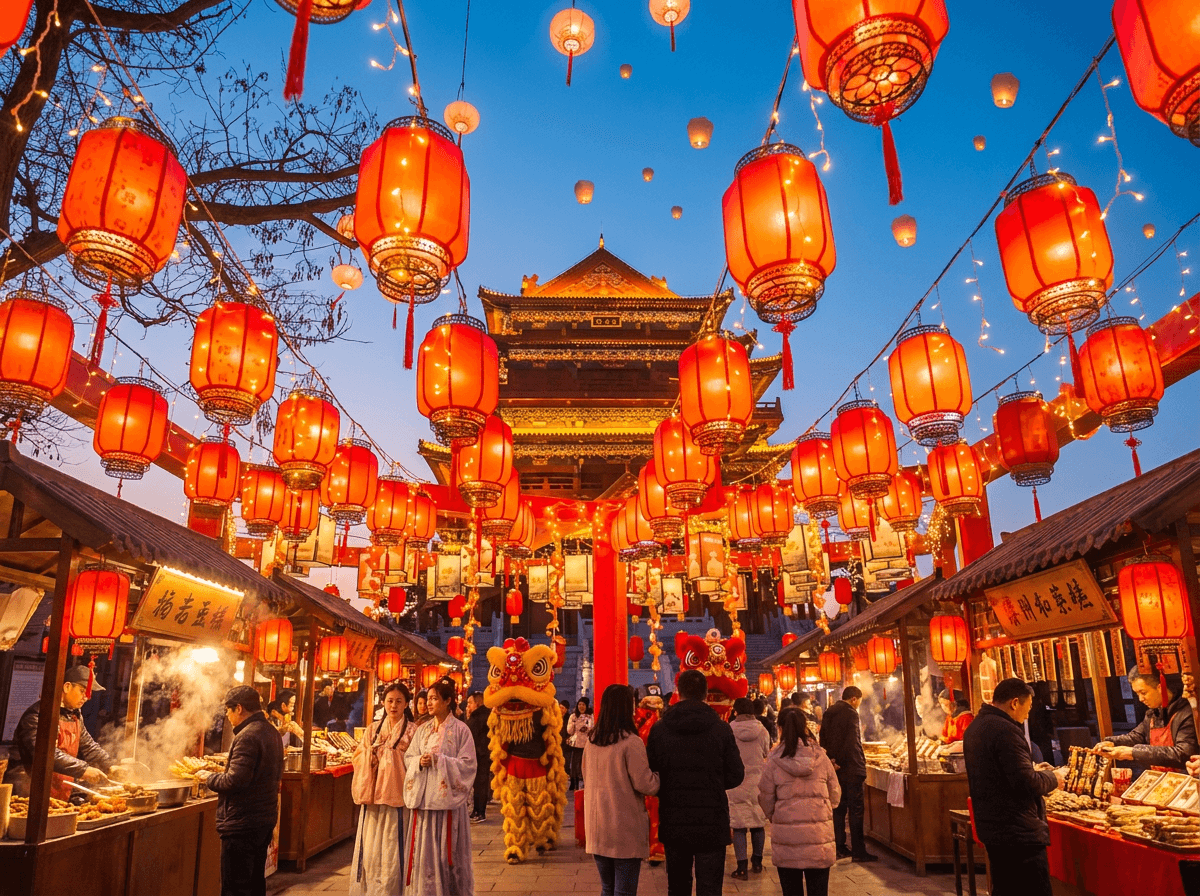
Fireworks and family dinners mark the start of Chinese New Year, but the Lantern Festival closes it out fifteen days later with a different kind of spectacle. Streets and temple grounds across the country fill with illuminated sculptures, some built from silk and bamboo, others powered by motors and augmented reality. This guide covers where the Lantern Festival puts on its most impressive displays heading into 2027, from a temple district in Nanjing to a city in Sichuan that has turned lantern-making into an industry of its own.
When the Lantern Festival Falls in 2027
The Lantern Festival always lands on the fifteenth day of the first lunar month, which places it on February 20, 2027. This timing marks the traditional end of Chinese New Year celebrations, closing out a stretch of holidays that begins with Lunar New Year's Eve on February 5, roughly two weeks earlier.
Celebrations rarely wait for the exact date, though. Most major lantern displays open days or even weeks before the Lantern Festival itself, running continuously through the holiday period so visitors can plan around work schedules and travel logistics rather than a single night.
The festival's roots stretch back roughly two thousand years, blending Buddhist, Taoist, and folk traditions into a single celebration. Floating lanterns first appeared on Nanjing's Qinhuai River during the Ming Dynasty, when Emperor Zhu Yuanzhang introduced the practice, and that innovation eventually spread into the water-lantern displays now common at Lantern Festival celebrations worldwide.
Crowds build steadily as the Lantern Festival approaches its peak date, with the final night typically drawing the largest turnout at every major venue. Visitors hoping to avoid the thickest crowds should consider arriving a few days before February 20, when displays are already running but attendance stays comparatively manageable. Exact opening dates and ticket pricing for the 2027 season are usually confirmed only a few months out, so checking each venue's official announcement closer to the date remains the safest approach.
Nanjing's Confucius Temple and the Qinhuai Lantern Festival
Nanjing's Lantern Festival celebration centers on the Confucius Temple district, where lantern sets have decorated the surrounding streets for well over a thousand years. Local tradition traces the practice back to the Six Dynasties period, when Nanjing served as a major cultural capital.
The display here spreads across three distinct layers. On land, lantern sets transform the temple district and the nearby Laomendong historical area into an illuminated maze. On the water, painted boats carry visitors along the Qinhuai River past reflections of lanterns lining both banks. Overhead, larger themed installations stretch between the eaves of the district's classical architecture.
Locals in Nanjing have a saying about the Lantern Festival here: visiting the city during the new year without seeing the Confucius Temple lanterns barely counts as celebrating at all. That local pride has earned the event two nicknames, translated roughly as "the finest lantern festival under heaven" and "Qinhuai lantern art crowns the nation."
Beyond simply viewing the lanterns, visitors can join in guessing lantern riddles, a tradition where written puzzles hang alongside the displays, testing knowledge of history, literature, and wordplay. Food stalls throughout the district serve Jiangsu specialties, giving the evening a rhythm that alternates between sightseeing and eating.
Arriving before dusk lets visitors watch the gradual transition as lanterns switch on across the district. Comfortable shoes matter here, since the historic streets involve considerably more walking than a typical evening out, and accommodation nearby tends to book up quickly as the Lantern Festival date approaches each year.
Zigong: The World's Lantern Capital
Zigong, a city in Sichuan better known internationally for its dinosaur fossil sites, has spent over a thousand years building a parallel reputation as China's lantern-making capital. Abundant local bamboo and silk, combined with generations of skilled artisans, turned this into the industry's undisputed center.
Recent editions of the Zigong International Dinosaur Lantern Festival have opened in late January at the city's Lantern World venue, running through the Spring Festival period and past the Lantern Festival date itself. Ticket pricing in past years has followed a two-tier structure, with a lower rate on regular days and a higher rate during the peak holiday stretch, plus free entry for seniors and young children. The exact 2027 opening date and pricing will likely follow a similar pattern, though confirming current details before booking remains worthwhile.
Scale defines the Zigong experience more than anywhere else on this list. Massive lantern installations here have included pagodas assembled from hundreds of thousands of porcelain pieces and mechanical dragons stretching hundreds of meters, engineered to move and roar as visitors pass. Augmented reality elements have let recent visitors interact with virtual creatures through their phones as they walk the main route, a feature organizers have expanded nearly every year.
This combination of traditional craft and modern technology sets Zigong's Lantern Festival display apart from Nanjing's historic, temple-centered version. Where Nanjing leans into centuries of continuous tradition, Zigong pushes toward spectacle and innovation, treating each year's display as a chance to outdo the last one's scale and complexity.
Visitors planning a Zigong trip specifically for the Lantern Festival should book accommodation early, since the city's tourism infrastructure caters heavily to this single annual event and fills up predictably each year.
Shanghai's Yu Garden Lantern Show
Yu Garden offers a quieter, more classical alternative to the scale of Zigong or the sprawl of Nanjing's temple district. This traditional Chinese garden in central Shanghai typically hosts a lantern show running from the first day of the lunar new year through the eighteenth, covering the entire holiday period rather than concentrating around the Lantern Festival date alone.
Origins here trace back to displays once held in the adjacent City God Temple area during the Ming and Qing Dynasties. Recognition followed in 2010, when the tradition earned a listing as national intangible cultural heritage, cementing its place among China's most historically significant lantern celebrations.
Garden settings shape the character of this display considerably. Rather than sprawling across open streets, lanterns here integrate into Yu Garden's existing pavilions, bridges, and ponds, creating a more intimate viewing experience than the crowds found at larger citywide events.
Visitors combining a Shanghai trip with Lantern Festival viewing often pair Yu Garden with the surrounding Yuyuan Bazaar, where food stalls and shops stay open late throughout the holiday period. This makes Yu Garden a practical choice for travelers who want a genuine Lantern Festival experience without building an entire trip around a single specialized destination.
Practical Tips for Visiting the Lantern Festival
Booking transportation and accommodation early matters at every destination on this list, since Lantern Festival travel coincides with the tail end of China's busiest domestic travel season. Trains and flights into Nanjing, Zigong, and Shanghai tend to fill up weeks in advance during this period.
Layered clothing helps across all three cities, since late-February evenings still carry a chill in most of China regardless of daytime warmth. Standing outdoors for extended periods while viewing lantern displays makes proper outerwear more important than it might seem during a daytime visit.
Timing a visit for a few days before the official Lantern Festival date, rather than the night itself, generally produces a better experience. Displays run for days or weeks beforehand, and crowds thin out noticeably compared to the peak crush that builds around the date itself.
Since specific opening dates, ticket prices, and program details for 2027 are typically announced only a month or two ahead, travelers planning around this guide should confirm current information directly with each venue as the date gets closer.
Conclusion
Each of these Lantern Festival destinations offers its own version of the same holiday. Nanjing leans on centuries of continuous tradition along the Qinhuai River, Zigong pushes lantern-making into something closer to engineering spectacle, and Shanghai's Yu Garden keeps the celebration intimate within a classical garden setting. Picking between them mostly comes down to which version of the Lantern Festival sounds more appealing: historic and layered, massive and technical, or quiet and contained within a single classical space.