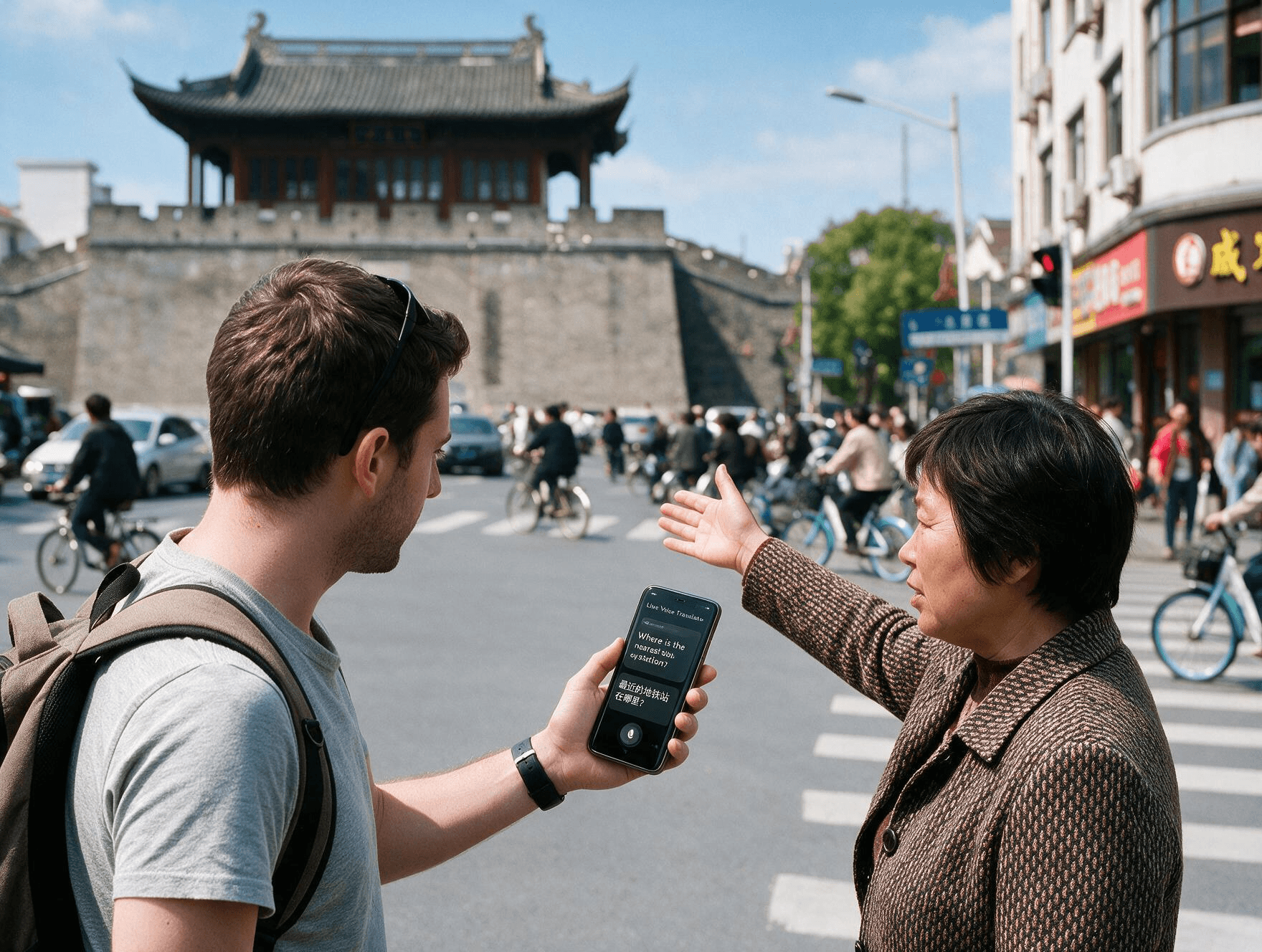
This is a question that first-time visitors ask constantly, and the brief answer is yes. Every year, millions of tourists journey to China without knowing a word of Mandarin, depending on translation applications, professional guides, and a surprisingly large amount of English signage in big cities. That said, the quality of the experience shifts considerably based on your destination and how much solo travel you intend to undertake. This piece outlines what it truly requires to visit China without speaking Mandarin, highlighting where the language gap poses the biggest challenge and which tools make getting around genuinely feasible. Grasping these specifics ahead of time transforms a major source of worry into a minor logistical footnote.
Why the Language Hurdle Seems Larger Than It Actually Is
The writing system of Mandarin tends to intimidate most guests before they even touch down. Because the characters bear no resemblance to Latin script, visitors often assume they will struggle to decipher menus, street signs, or directions in any location. While this belief contains a grain of truth, it exaggerates the actual difficulty for anyone hoping to explore China without speaking Mandarin.
Large metropolitan areas have adjusted significantly to accommodate international guests. Air terminals, railway hubs, and metro networks generally feature English text alongside Chinese characters, with announcements frequently repeated in both languages. This infrastructure alone eliminates a huge chunk of the anxiety travelers typically bring along on their trip.
Technology has also bridged much of the remaining gap. Smartphone cameras are capable of translating signs and menus on the spot, while voice translation apps manage simple conversations with reasonable accuracy. Such tools were unavailable to previous generations of visitors, which explains why older travel guides about China often exaggerate how hard it is to get around these days.
A cultural readiness to assist is also a key factor. Many residents, particularly younger people in urban centers, possess at least a basic knowledge of English and frequently make an effort to help tourists who appear visibly lost. When paired with contemporary translation aids, this helpfulness makes it entirely practical to visit China without speaking Mandarin, as long as travelers remain flexible and patient when communication becomes awkward.
Where English Is Sufficient to Get You By
Over the last twenty years, major tourist hotspots have developed considerable English-language infrastructure. Cities like Beijing, Shanghai, and Guangzhou all display bilingual signs throughout public transit systems, shopping areas, and most sites popular with international guests.
Hotels that cater to foreign visitors almost always have staff who speak English, at least at the reception desk. Reservations made through global booking sites usually link travelers with establishments already used to accommodating guests who cannot travel to China without speaking Mandarin comfortably, since this group represents the bulk of their international business.
Well-known attractions also tend to provide information in English. Galleries, historic landmarks, and primary tourist zones commonly offer English audio guides, printed brochures, or bilingual personnel stationed at entry points and help desks.
Independent travel has also become significantly easier thanks to transportation apps. Ride-hailing services such as Didi provide English-language interfaces, and high-speed rail booking platforms increasingly support English throughout the entire purchasing process. These systems reduce the need for spoken interaction, since most of the transaction happens through the app itself.
Restaurants near major attractions frequently offer picture menus or English translations alongside Chinese characters. While pronunciation still poses challenges, pointing at a photo generally solves the immediate problem of ordering food without shared vocabulary between customer and staff.
Where You Will Need More Than English
Rural areas and smaller cities present a genuinely different challenge. English signage drops off significantly outside major tourist zones, and staff at smaller restaurants or shops may have no English at all. Travelers hoping to travel to China without speaking Mandarin should expect more friction once they leave well-trodden tourist paths.
Local transportation within smaller towns often lacks the bilingual support found in major cities. Bus routes, in particular, rarely offer English announcements or signage, making destination confirmation genuinely difficult without at least basic Mandarin or a translation app on hand.
Markets and smaller family-run businesses present similar challenges. Negotiating prices or asking specific questions about products becomes considerably harder without shared language, even when both parties want to communicate clearly.
Medical situations deserve particular attention. Travelers dealing with illness or injury outside major cities may struggle to explain symptoms accurately without translation support, so carrying a translation app with medical vocabulary built in becomes genuinely important insurance for extended rural travel.
Tools That Make It Work
Translation apps have become essential equipment for travelers who want to travel to China without speaking Mandarin confidently. Camera-based translation handles menus and signs instantly, converting characters into readable English text in real time.
Voice translation apps handle spoken exchanges reasonably well, though background noise and accents can still cause errors. Testing these apps before departure, rather than during an urgent moment, helps travelers understand their limitations ahead of time.
Offline translation capability matters significantly given inconsistent internet access in some areas. Downloading offline language packs before departure ensures translation tools keep working even without reliable data connections in more remote regions.
Preloaded phrase cards or basic phrasebooks still serve a purpose beyond digital tools. Having a written list of key phrases, addresses, or dietary restrictions in Chinese characters gives travelers something to show directly when spoken communication breaks down entirely.
Practical Tips for a Smooth Trip
Hiring a local guide for at least part of the trip solves most communication problems immediately. Guides bridge the language gap while also providing cultural context that generic translation apps cannot offer on their own.
Jotting down your hotel’s address in Chinese characters each morning before you set out sidesteps a frequent source of irritation. Local taxi drivers and residents can read the text directly, bypassing the need to decipher pronunciation, which often gets mangled or lost when spoken across different languages.
Memorizing a small set of essential phrases tends to yield results that surpass most visitors’ initial expectations. Offering simple greetings, knowing how to say basic numbers, and making polite requests demonstrate a sincere attempt to connect, which frequently enhances the quality of help you receive from locals during your journey.
Conclusion
It is entirely possible for travelers to visit China without knowing Mandarin, as long as they plan carefully for the limitations that remain outside of the major metropolitan centers. Advances in translation technology, the widespread use of bilingual signage, and a genuine readiness among locals to assist have made navigating the country independently much easier than in the past. While rural regions and smaller towns still require greater patience and more thorough preparation, even in those areas, having the right resources bridges most of the divide. Anyone who is on the fence about booking a trip solely due to language worries should rethink that decision, since the actual barrier is significantly lower in reality than it might seem from a distance.