Ask most travelers to name China's most visually striking cities, and Chongqing rarely comes up. Beijing, Shanghai, and Xi'an dominate that conversation instead. Yet Chongqing packs more sheer visual disorientation into a single afternoon than almost anywhere else in the country, built into mountains so steep that buildings enter on one floor and exit on another entirely. This article explains why Chongqing deserves a spot on more itineraries, and what makes this sprawling, foggy, spice-scented city feel like it wandered out of a science fiction film.
Why Chongqing Looks Like Science Fiction
Chongqing sits in a mountainous stretch of southwestern China, and its terrain dictated everything about how the city grew. Flat land was never an option here, so builders stacked structures vertically instead, wrapping roads and rail lines around cliffs rather than flattening them first.
That approach produced buildings unlike anything found in most other Chinese cities. A single high-rise might have its main entrance on the first floor from one street, while a road on the opposite side connects directly to the twelfth or twentieth floor. Locals and visitors alike call this effect the city's "8D" layout, a nickname that captures the disorientation better than any technical description could.
Chongqing's population adds to the scale of the effect. Including its rural outer districts, the municipality covers an area roughly the size of Austria, making it one of the largest administrative regions in the world by both size and population. Most of that footprint stays rural, but the urban core alone houses millions of people packed into this vertical, layered terrain.
Fog rolls through Chongqing regularly, especially in the cooler months, softening the skyline into something closer to a painted backdrop than a real city. Combined with the neon signage that lights up much of the downtown core after dark, the atmosphere leans further into its science-fiction reputation than the city's planners likely ever intended.
The Monorail That Runs Through a Building
No single image captures Chongqing's reputation better than Liziba Station. Line 2 of the city's monorail system passes directly through floors six, seven, and eight of a nineteen-story residential building, with apartments stacked both above and below the tracks.
Engineers built the station and the surrounding block simultaneously back in the early 2000s, treating the transit line and the building as one integrated structure rather than retrofitting a train route into existing housing. Residents living just above the tracks report the noise stays surprisingly manageable, a detail that surprises most first-time visitors watching the trains pass through.
A dedicated viewing platform sits across from the building, letting crowds gather daily to watch trains emerge from one side of the structure and vanish into the other. Arriving before mid-morning generally means avoiding the thickest crowds, since the spot has become one of Chongqing's most photographed attractions.
Beyond its visual appeal, Liziba represents something larger about how this city solves problems. Where flat cities might route around an obstacle, Chongqing tends to build straight through it, treating impossible terrain as a design constraint rather than a dealbreaker.
Hongya Cave and Chongqing After Dark
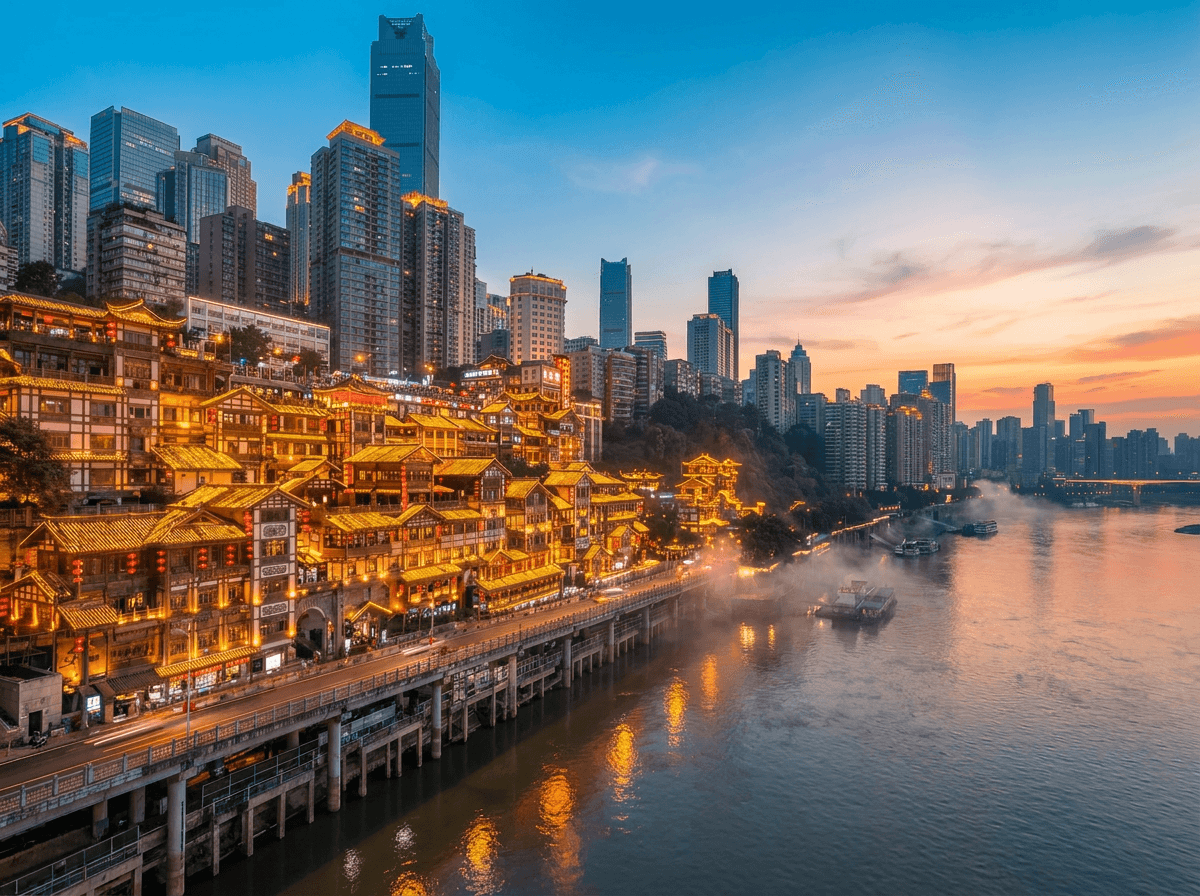
Hongya Cave transforms Chongqing's reputation from merely strange into something closer to cinematic. This eleven-story complex of stilted buildings clings to a cliff face above the Jialing River, stacking shops, restaurants, and walkways across multiple connected levels.
Once night falls, lanterns and warm lighting wash across the entire structure, creating a scene many visitors compare to an animated fantasy setting rather than a functioning commercial complex. Photographs rarely do the effect justice, since the layered lighting shifts constantly as visitors move between levels.
The Yangtze River Cableway offers a different nighttime perspective on the same city. Operating since 1987, this cable car carries passengers directly across the river, offering an elevated view of Chongqing's layered skyline rising from both banks simultaneously.
Together, these two experiences frame Chongqing as a city built for viewing after dark as much as during daylight hours. Many visitors structure an entire evening around moving between elevated viewpoints, watching the city's multiple levels light up in sequence as the sky darkens overhead.
A City Built on Spice and Fog
Chongqing's food culture matches its visual intensity. This city claims the strongest historical link to Chongqing-style hotpot, a fiery, oil-based broth built around chilies and numbing Sichuan peppercorns that locals treat as a near-daily meal rather than an occasional indulgence.
Street-level restaurants throughout the older districts serve variations on this hotpot alongside smaller spiced dishes, reflecting a broader regional preference for bold, assertive flavor over subtlety. Visitors expecting a milder introduction to Chinese cuisine should adjust expectations accordingly before their first meal here.
Fog complements the city's culinary reputation in an odd, complementary way. Chongqing's nickname as a foggy city stems from genuine climate patterns, with mist frequently settling over the rivers and lower streets during cooler months, adding atmosphere to an already visually dense urban landscape.
This combination of intense flavor and atmospheric weather sets the tone for a first visit to Chongqing, whether someone arrives chasing the food, the fog, or simply the photographs everyone else has posted first.
Why Chongqing Stays Off Most Itineraries
Distance from more established tourist circuits explains part of Chongqing's lower profile. The city sits further inland than Shanghai or Beijing, making it a less obvious add-on for travelers building shorter, first-time China itineraries around coastal or northern destinations.
Language around the city's identity has not helped either. Chongqing markets itself less aggressively to international visitors than Chengdu, its more famous neighbor known for panda conservation centers and a gentler tourism pitch built around leisure and food.
Yet accessibility has genuinely improved. High-speed rail connections now reach Chongqing from most major Chinese cities within a few hours, and the city's metro system covers major attractions with bilingual signage throughout. Reaching Chongqing no longer demands the kind of dedicated planning it once did.
For travelers willing to look past the usual shortlist, Chongqing offers a version of urban China that most guidebooks have not fully catalogued yet, precisely because the city grew around its cliffs and rivers instead of flattening them for tourism.
Conclusion
Chongqing earns its reputation as China's most visually disorienting major city through genuine architectural necessity rather than any deliberate design gimmick. From the monorail threading through a residential tower to the lantern-lit stilt houses at Hongya Cave, this city offers scenes that feel imported from science fiction while remaining entirely, functionally real. Anyone planning a China trip around the usual four or five cities might reconsider that shortlist once they see what an afternoon in Chongqing actually looks like.