Zhangjiajie's sandstone pillars get most of the attention in travel photos, but a separate attraction nearby has quietly become one of the region's biggest draws. The glass bridge and Grand Canyon of Zhangjiajie sit about an hour outside the city, offering a very different kind of thrill than the misty pillars everyone recognizes from postcards. This guide covers what visiting the glass bridge and Grand Canyon of Zhangjiajie actually involves, from the walk across the bridge itself to the canyon trail waiting below it.
Where This Attraction Actually Sits
A common mix-up trips up first-time visitors. The glass bridge and Grand Canyon of Zhangjiajie are not part of Zhangjiajie National Forest Park, despite sharing the same city name. This attraction sits in Cili County, roughly sixty kilometers east of Zhangjiajie city, and requires a separate ticket and a separate trip entirely.
Getting there typically means a bus or private car ride of about sixty to seventy-five minutes from downtown Zhangjiajie, or closer to seventy to ninety minutes if starting from Wulingyuan instead. Most visitors treat this as a dedicated half-day or full-day outing rather than something squeezed into a morning already spent elsewhere in the region.
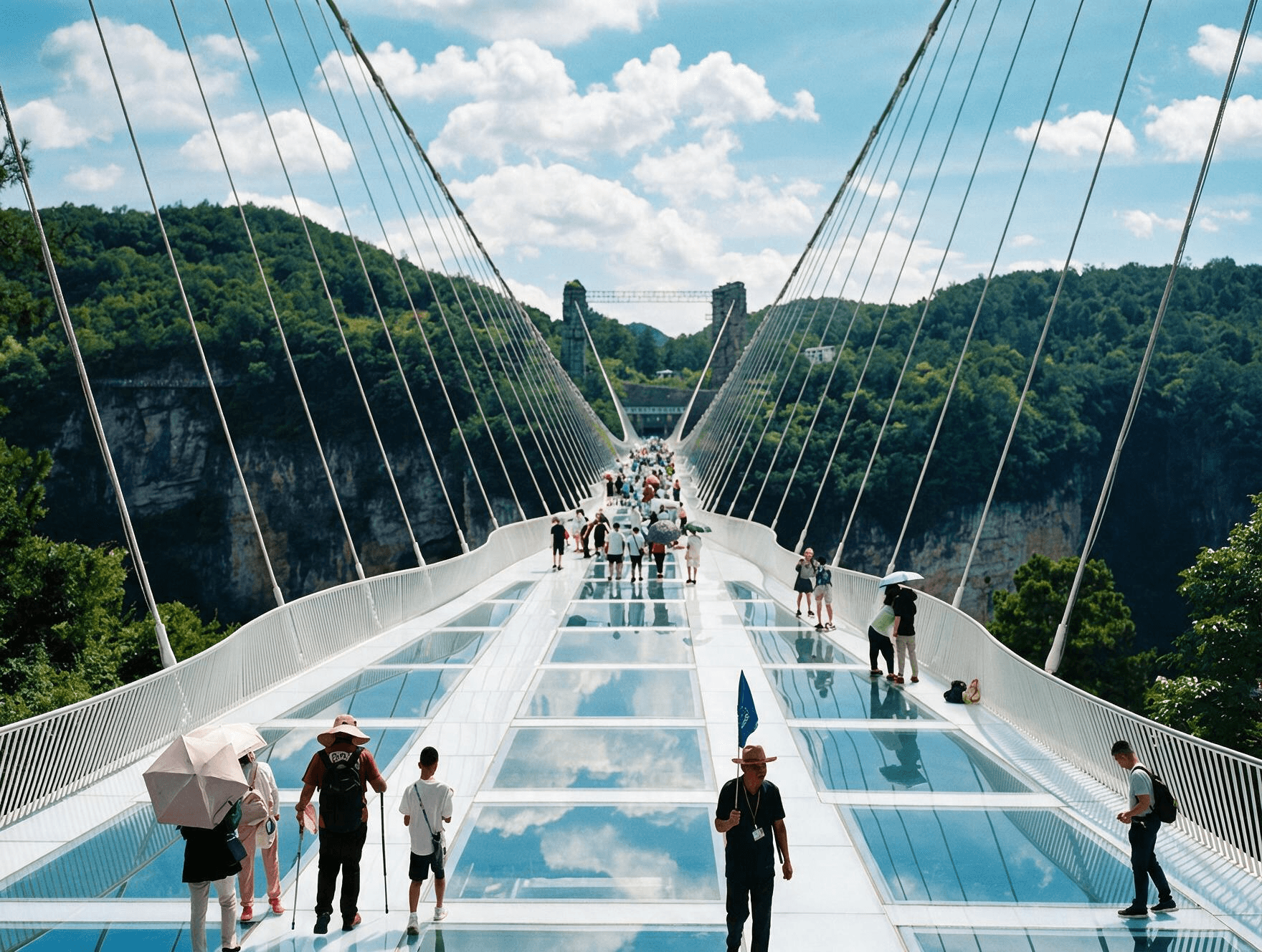
The canyon itself predates the bridge by millions of years, carved by water and erosion into a deep gash lined with waterfalls, caves, and dense forest. The bridge, completed in 2016 and designed by architect Haim Dotan, spans the gap between two cliffs at the canyon's narrowest point.
Distinguishing this destination from the national park matters practically, not just geographically. Travel agencies sometimes bundle both into a single itinerary, which can create confusion about which entrance fee covers what. Confirming exactly which attraction a booking includes prevents an unpleasant surprise once the group arrives at the gate expecting something different.
Walking the Glass Bridge Itself
The bridge stretches 430 meters across the canyon, suspended roughly 300 meters above the valley floor below. Numbers alone understate the sensation of actually standing on it, since the glass panels beneath your feet make the drop feel immediate rather than abstract.
Capacity limits keep the experience from becoming overwhelming. The bridge holds up to 800 visitors at once, and staff manage flow carefully during peak hours to avoid dangerous crowding on the narrower central section, where the deck tapers to just six meters wide.
A bungee jumping platform sits at the bridge's midpoint, offering a 260-meter drop that ranks among the highest commercial bungee jumps in the world. Most visitors skip this option, but watching someone else take the leap adds genuine drama to an already tense walk.
Visitors uneasy about heights still have an alternative nearby. A separate glass-and-wood walkway elsewhere in the canyon offers a similar view with a solid wooden path running alongside the transparent panels, giving nervous walkers somewhere to plant their feet without abandoning the experience entirely.
Weather affects visibility significantly on the bridge. Clear mornings offer the sharpest views straight down through the glass, while fog and rain can turn the crossing into a much quieter, more subdued experience with the canyon floor barely visible below.
Hiking the Canyon Trail Below
Beyond the bridge, the Grand Canyon offers its own separate hiking experience along the valley floor. Two main routes wind through the canyon, passing waterfalls, rock formations, and a series of suspended walkways built directly into the cliff face.
Steep sections test hikers more than the relatively flat bridge crossing above. Some stretches include steep stairs carved into rock, while an elevator or cable car handles the most demanding elevation changes for visitors who prefer not to climb the full descent on foot.
Water features define much of the canyon's character at ground level. Streams cut through the valley floor, and several waterfalls tumble down from higher points along the cliff walls, creating a noticeably cooler, mistier atmosphere than the exposed bridge above.
A zip line and an enclosed glass slide add extra activities for visitors looking to extend their time in the canyon beyond simple hiking. Neither feels essential to the core experience, but both offer a change of pace for travelers spending a full day at the site.
Combining the bridge crossing with a canyon walk typically takes most of a day. Rushing through both in a couple of hours is technically possible, but travelers who build in extra time tend to enjoy the pace far more than those trying to squeeze the visit into a tight schedule.
Tickets, Timing, and Avoiding Crowds
Tickets for the glass bridge and Grand Canyon of Zhangjiajie use a timed-entry system, capping the number of visitors allowed during each entry window. Booking several days ahead, particularly between April and October, prevents the disappointment of showing up to a sold-out slot.
Combined tickets covering both the canyon and the bridge cost more than canyon-only admission, and pricing has shifted over recent years, so checking current rates before finalizing a trip budget makes sense. Booking through official channels or a reputable agency generally avoids inflated markups charged by unofficial resellers.
Golden Week, the national holiday stretching across the first week of October, brings the heaviest crowds by far. Visitors hoping to actually enjoy the bridge rather than shuffle through it in a packed line should avoid this specific week entirely if their schedule allows any flexibility.
Weekday visits outside peak season generally offer a noticeably calmer experience. Arriving earlier in the day also helps, since crowds tend to build steadily as the morning progresses toward midday.
What to Bring and How to Prepare
Comfortable, sturdy footwear matters throughout the visit, particularly for the canyon trail's steeper sections. Sandals or smooth-soled shoes handle the bridge itself fine but struggle on uneven canyon paths lower down.
Layered clothing helps manage the temperature difference between the exposed, windy bridge and the cooler, shaded canyon floor beneath it. A light rain jacket adds useful protection given the region's unpredictable weather patterns throughout the year.
Anyone with a genuine fear of heights should think carefully before committing to the main glass crossing, though the alternative walkway offers a reasonable compromise. Bringing a fully charged phone or camera captures the experience, though many visitors find the view memorable enough without needing constant documentation.
Conclusion
The glass bridge and Grand Canyon of Zhangjiajie deliver an experience unlike anything found in the nearby national park, combining a genuine feat of engineering with a full day of hiking through dramatic canyon terrain. Book tickets ahead, skip the Golden Week crowds if your schedule allows it, and set aside enough time for both the crossing and the trail beneath it. Do that, and the visit earns its reputation rather than just its Instagram feed.