Discussions of China’s natural beauty often center on its mountains and rivers, yet the country’s waterfalls warrant equal regard. Diverse geological formations, ranging from karst plateaus to volcanic basalt, have given rise to cascades that count among Asia’s widest, tallest, and most dramatic. The following guide highlights several waterfalls in China worth planning a trip around, selected for their scale, ease of access, and visual impact. Each site reveals a distinct aspect of the landscape that formed it, from a thundering cross-border cascade to a striking winter spectacle of ice.
Huangguoshu Waterfall
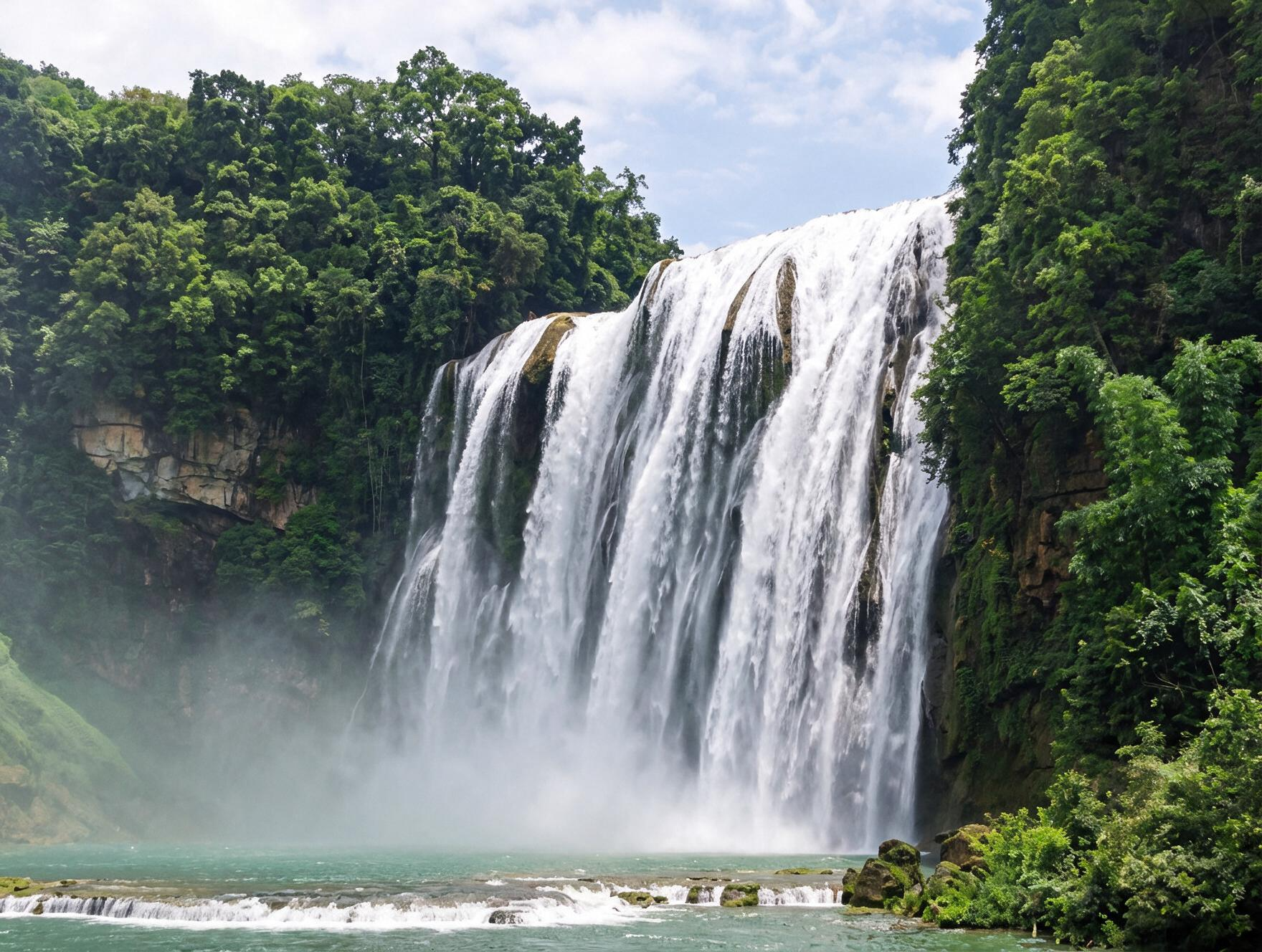
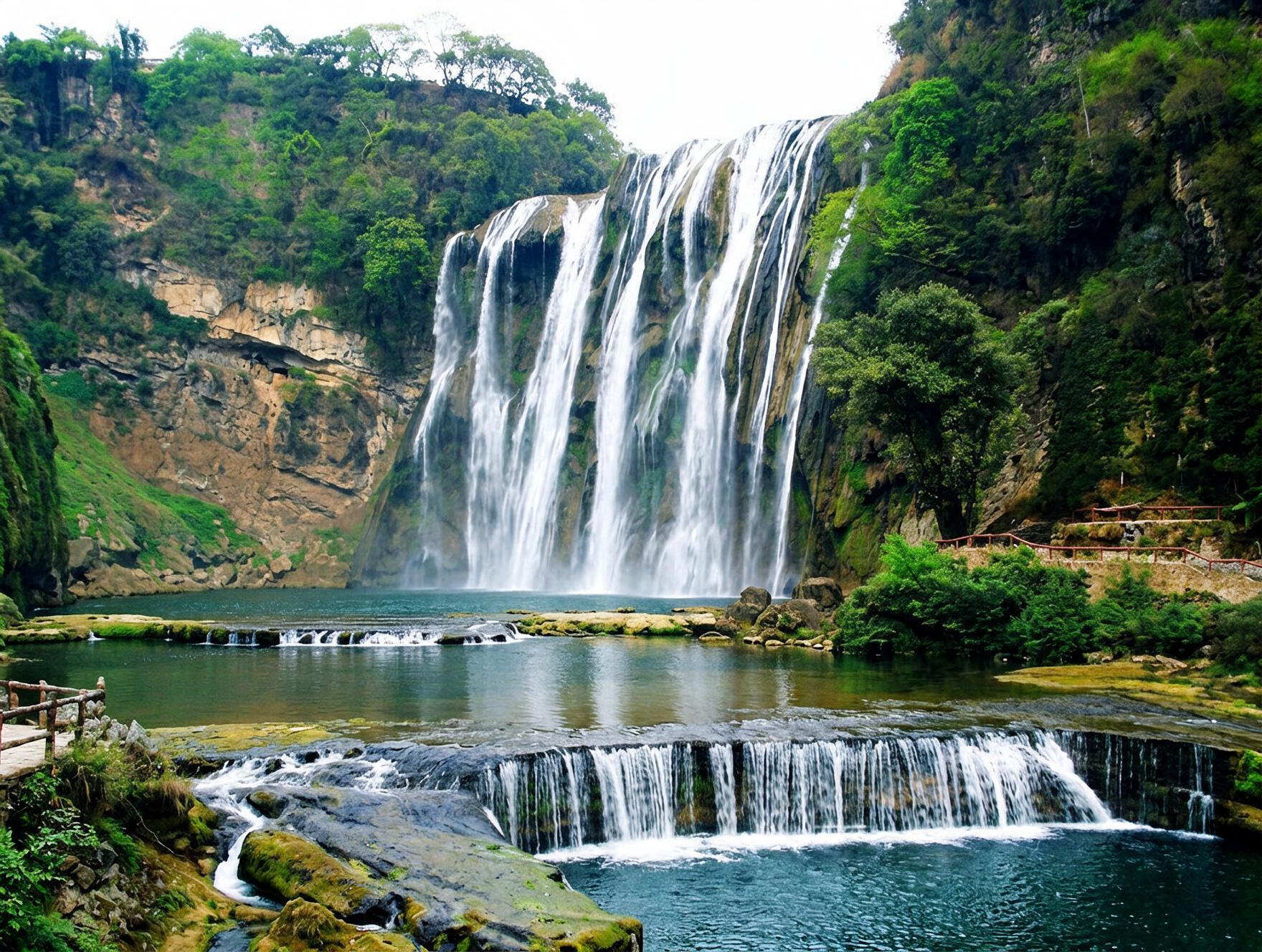
Located in Guizhou province, Huangguoshu ranks among China’s most renowned waterfalls, celebrated for its size and a unique feature: a cave path that allows visitors to walk directly behind the falling water. The main drop spans roughly 100 meters in width and plunges about 77 meters, generating a wall of mist visible from far away.
This cave route behind the curtain, called Water Curtain Cave, offers a perspective found at very few other sites globally. The experience is genuinely immersive, with the roar of the water growing louder as the path winds behind the cascade.
Paved trails, viewing platforms, and lodging within walking distance make this one of the easier large falls in the country to visit independently. The rainy season, roughly May through October, delivers the most dramatic water volume, though this period also draws larger crowds during peak viewing hours.
Nearby attractions add depth to a visit here. Several smaller waterfalls dot the surrounding scenic area, linked by walking trails that allow visitors to extend a day trip into a longer exploration of the region’s karst landscape.
Hukou Waterfall
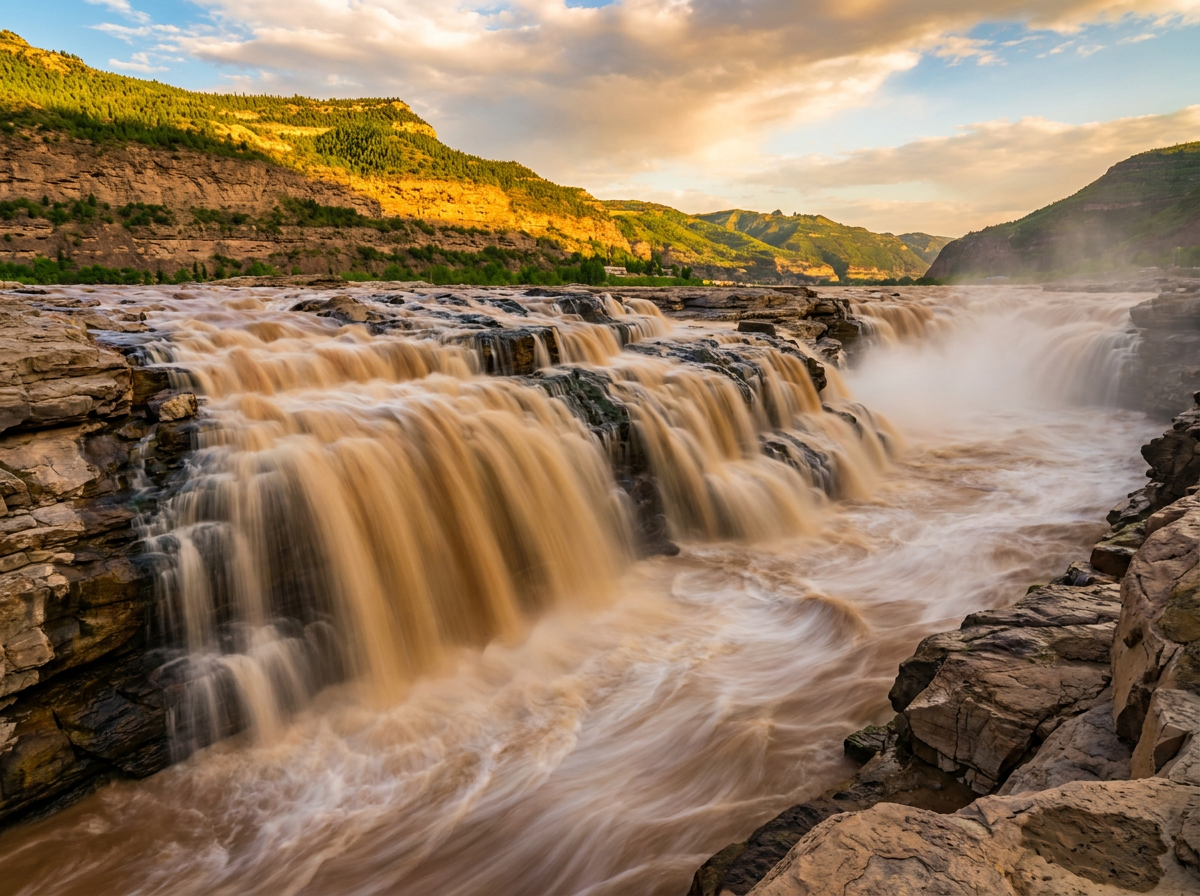
Hukou lies along the Yellow River, straddling the border between Shanxi and Shaanxi provinces, and presents a character entirely different from Huangguoshu. Thick, mud-colored water thunders through a narrow rock channel, creating a churning, chaotic scene rather than a clean vertical drop.
Winter transforms this site into one of the more unusual waterfalls in China to witness. Freezing temperatures partially ice over sections of the falls, creating dramatic ice formations alongside the still-flowing water at the center of the channel.
The name Hukou translates to teapot spout, describing how the wide river narrows dramatically before plunging through the gorge. This bottleneck effect intensifies the water's force, producing a deep, resonant roar audible well before the falls come into view.
Visiting during summer flood season shows the waterfall at its most powerful, though muddy spray can limit visibility and photography conditions. Spring and autumn offer more moderate water levels alongside clearer air, making these seasons preferable for visitors prioritizing photography over sheer volume.
Detian Waterfall
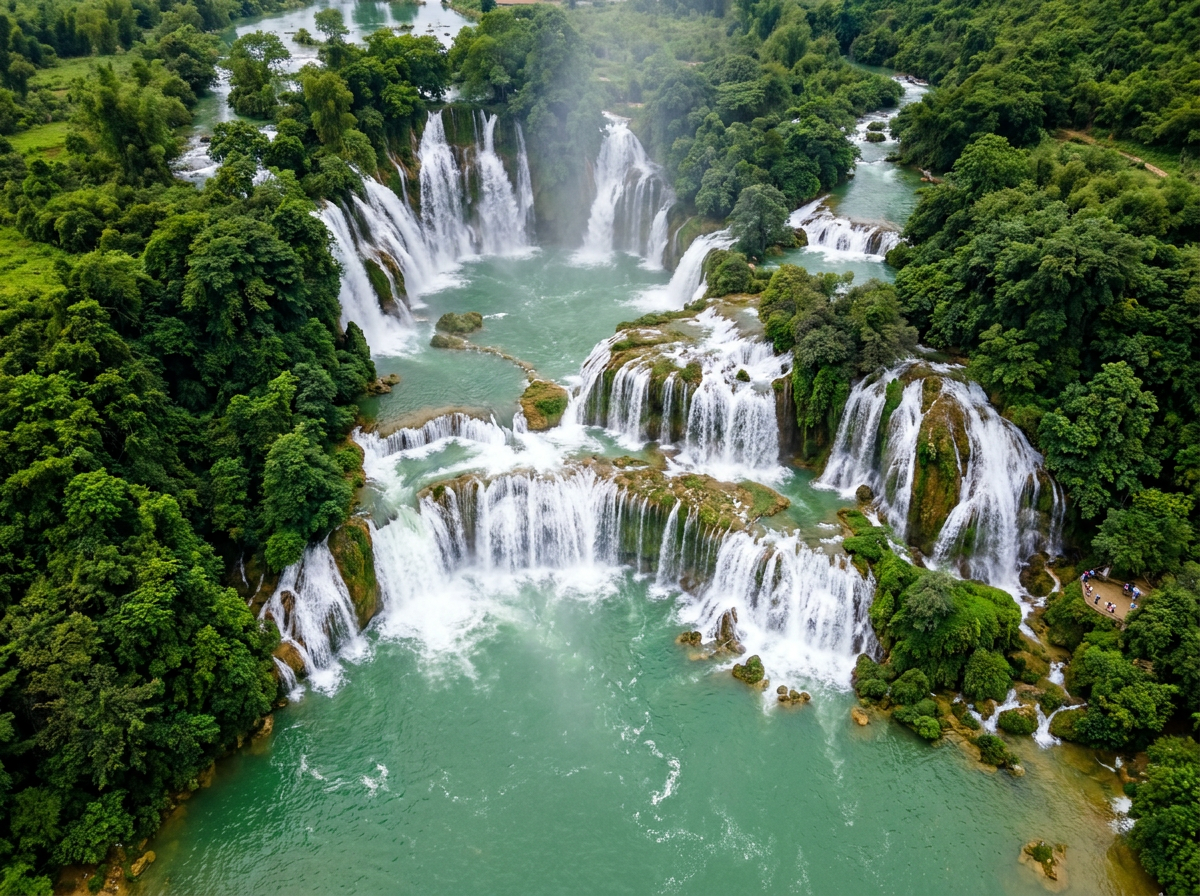
Detian sits along the border between China and Vietnam in Guangxi province, forming one of the largest transnational waterfalls in Asia. Multiple tiers cascade across a wide rock face, with the Chinese and Vietnamese sides offering slightly different viewing angles of the same falls.
Boarding a bamboo raft gives visitors a direct route to the base of the falls, placing them close enough to feel the spray and mist carried by the rushing current. The raft ride is what elevates this beyond a scenic viewpoint — you go from a distant panorama to being sprayed by the falls in the same visit.
The falls are framed by surrounding rice terraces and karst hills, providing visual context that sets Detian apart from more isolated waterfall sites. Morning light typically offers the clearest conditions for photography, before mist and humidity accumulate later in the day.
Border formalities introduce an extra layer of complexity here, given that the falls sit directly on the international boundary. Travelers should verify current entry requirements before visiting, as crossing regulations near border attractions can shift and often differ from standard tourist visa conditions elsewhere in the country.
Nuorilang Waterfall
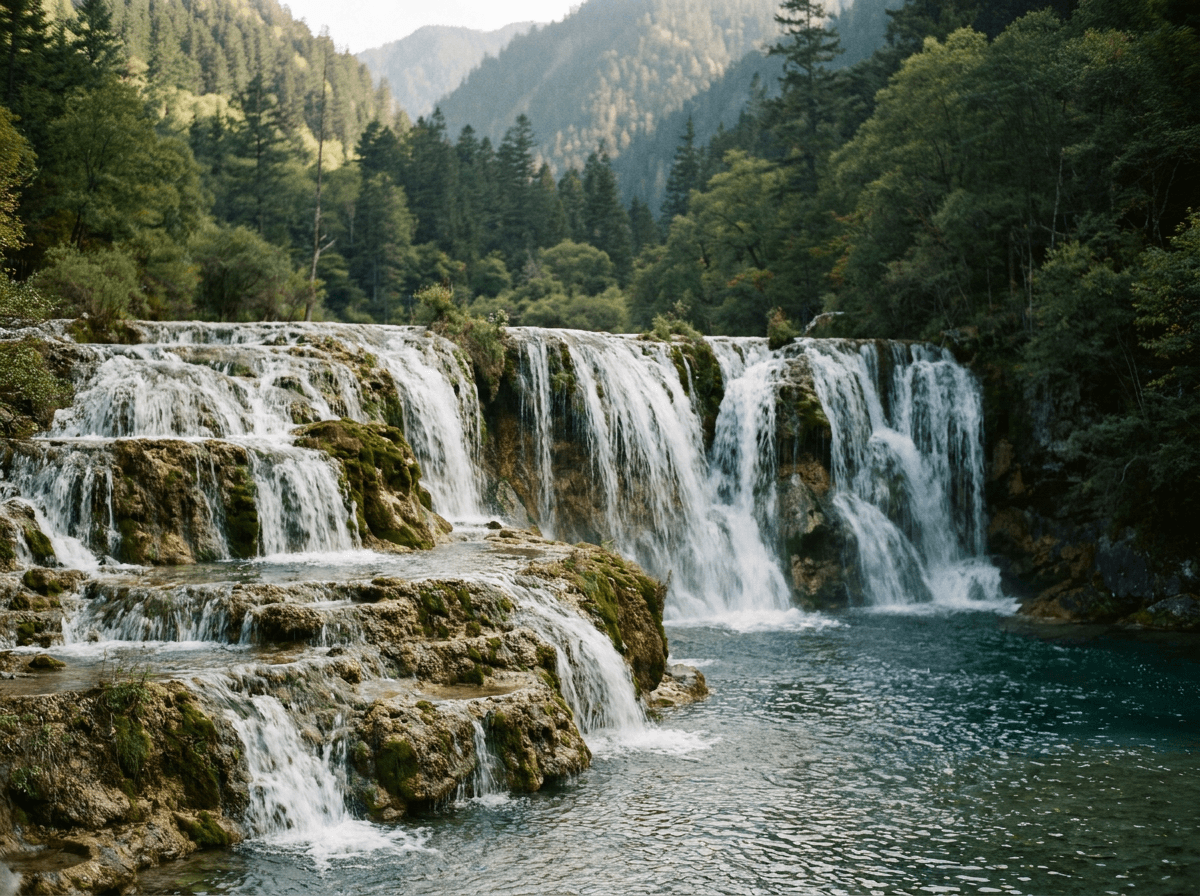
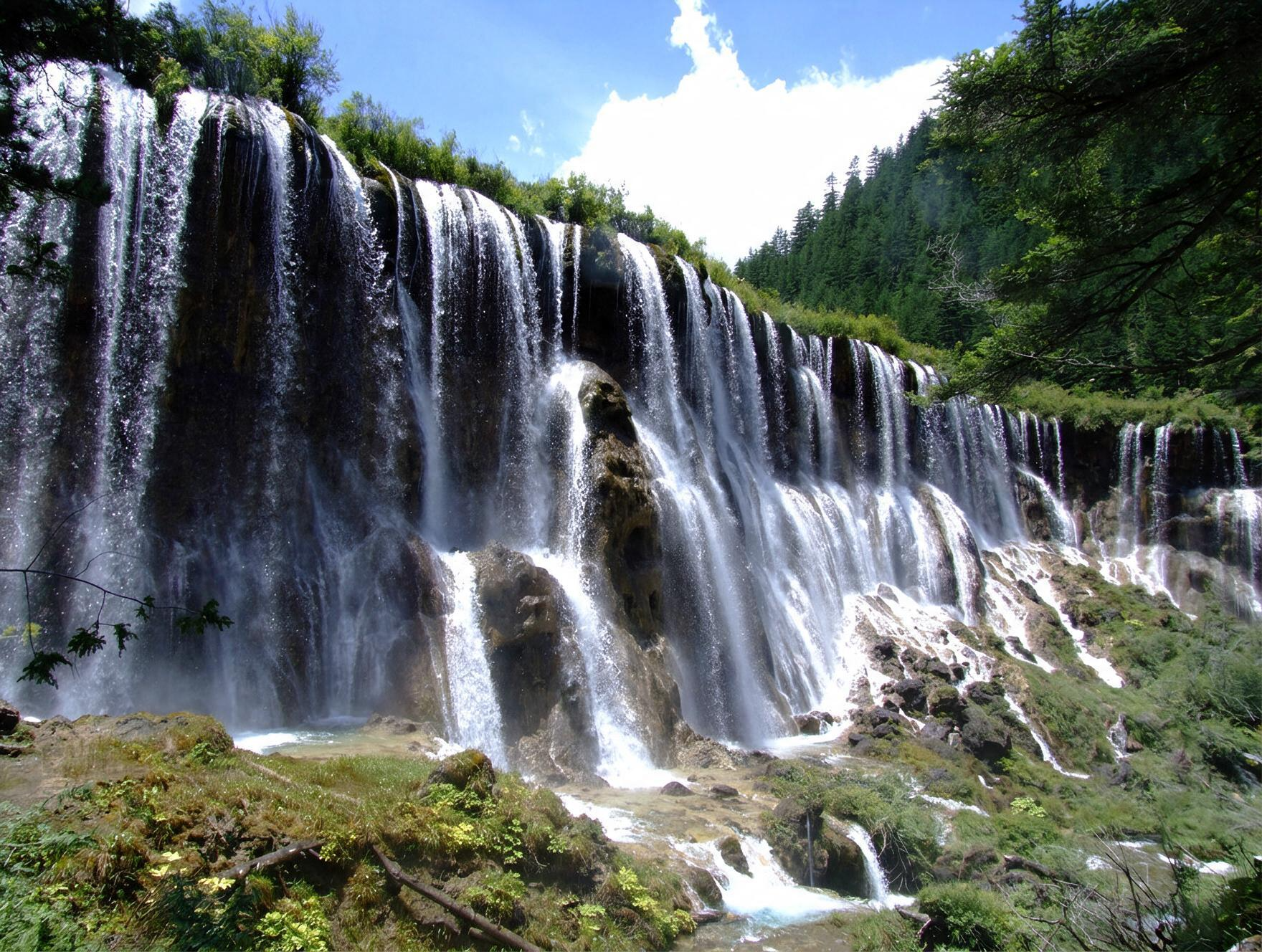
Nuorilang is located within Jiuzhaigou Valley, one of China's most celebrated nature reserves, and ranks among the widest waterfalls in the country at over 300 meters across. Rather than the dramatic vertical drops found in other locations, Nuorilang spreads horizontally across a broad, tiered rock face.
Water rich in minerals gives the falls a distinctive blue-green tint, matching the surrounding lakes that define Jiuzhaigou's reputation for vivid colors that appear almost artificial. Boardwalks positioned near the falls allow visitors to observe the water from multiple angles without disturbing the surrounding vegetation.
Autumn delivers the most striking visual combination at this site. Golden and red foliage frames the blue-tinted water, creating a contrast that draws photographers from around the world during the peak color season in October.
Access requires an entry ticket to Jiuzhaigou itself, and shuttle buses transport visitors between viewpoints throughout the reserve. Booking tickets in advance remains essential during peak season, since daily visitor caps can sell out days ahead during holidays.
Diaoshuilou Waterfall
Diaoshuilou is located in Heilongjiang province, formed by volcanic activity that shaped the surrounding basalt landscape thousands of years ago. The falls drop over a wide rock shelf into a churning pool below, framed by dense forest that turns vivid colors each autumn.
Winter is when this site looks like nowhere else on this list. Falling water partially freezes into massive ice formations, while the core current continues flowing beneath layers of ice, creating a strange combination of motion and stillness.
Summer brings the heaviest water volume, driven by regional rainfall patterns that peak between June and August. Visitors seeking maximum drama and thunderous sound should plan around this season, despite the added humidity and occasional rain during the visit itself.
The remote location keeps visitor numbers lower than at more famous sites elsewhere in the country. Reaching Diaoshuilou typically requires a flight to a regional hub followed by additional driving, which filters out casual day-trippers in favor of travelers specifically seeking this destination out.
Conclusion
The most breathtaking waterfalls in China exhibit a vast diversity in size, seasonal behavior, and geological roots. Whether it is the cascade hidden within the caves of Huangguoshu or the frozen spectacle of Diaoshuilou during winter months, each location presents a unique motivation for a visit. Travelers who study seasonal patterns and arrange their trips according to access needs will discover that these Chinese waterfalls compete with any natural wonder globally. For those designing an itinerary centered on nature, these falls warrant significant attention alongside the nation’s more renowned rivers and mountain ranges.