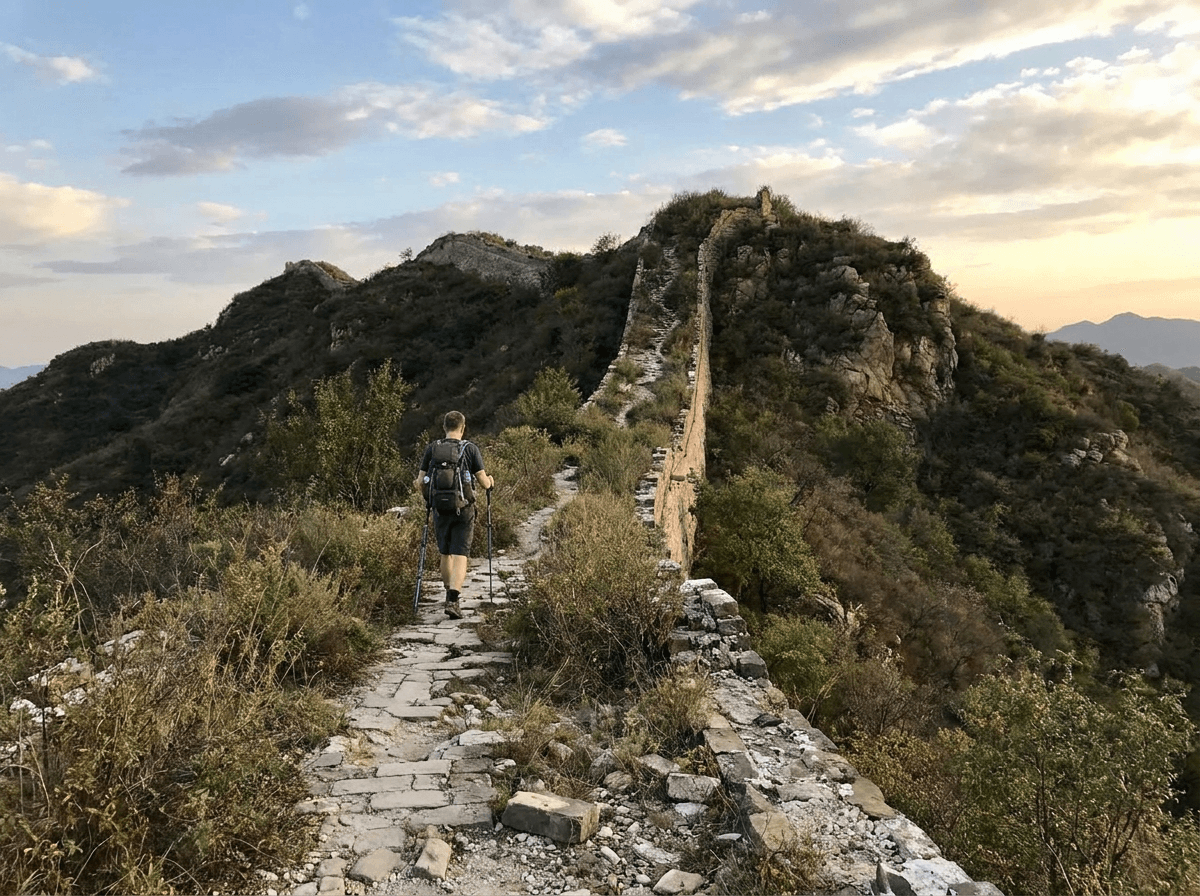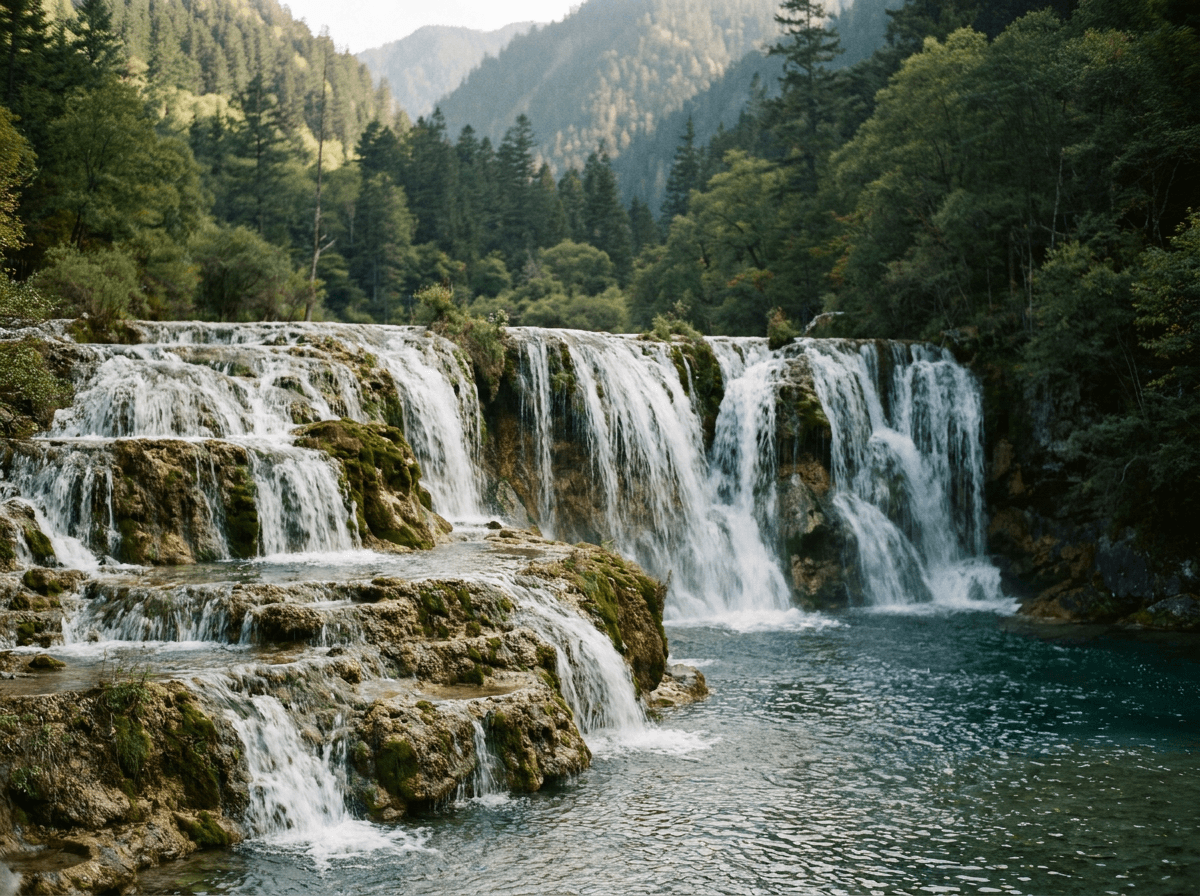
China rarely makes the shortlist when climbers are planning an international getaway. Most discussions still focus on Europe, the United States, or Southeast Asia. However, rock climbing in China has expanded quickly over the last twenty years, building up world-class limestone towers, sandstone big walls, and granite cliffs across various regions. This article looks at the top places for rock climbing in China, selected for their route quality, scenery, and the type of infrastructure that makes a trip feasible for visiting climbers. Each destination provides a unique style of climbing, defined by different rock types and terrain.
Yangshuo
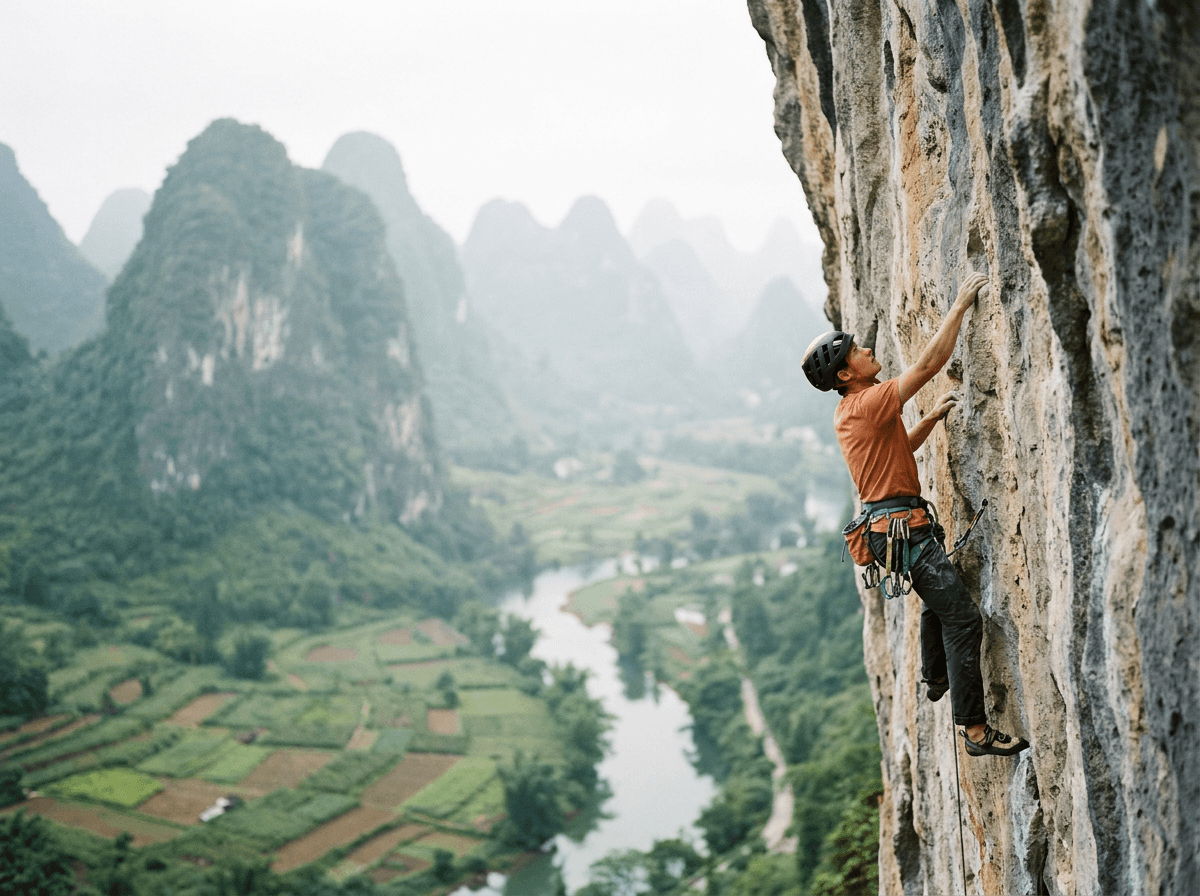
Yangshuo serves as the anchor for the entire scene surrounding rock climbing in China. Limestone karst towers rise dramatically from rice paddies near the Li River, creating a landscape that looks almost like a painting. Hundreds of bolted routes cover the surrounding cliffs, ranging from beginner-friendly slabs to steep, technical tufa climbs.
The town itself caters heavily to climbers, featuring gear shops, guiding services, and hostels built around the sport. Moon Hill, a natural arch formation just outside town, remains one of the most photographed and climbed formations in the region.
For beginners or anyone arriving without local contacts, Yangshuo is simply the easiest place on this list to show up and start climbing. Guides speak English at most operators, and route difficulty spans a wide enough range to keep experienced climbers challenged too. Spring and autumn bring the most comfortable temperatures, while summer humidity can make holds slick by midday.
Getu Valley
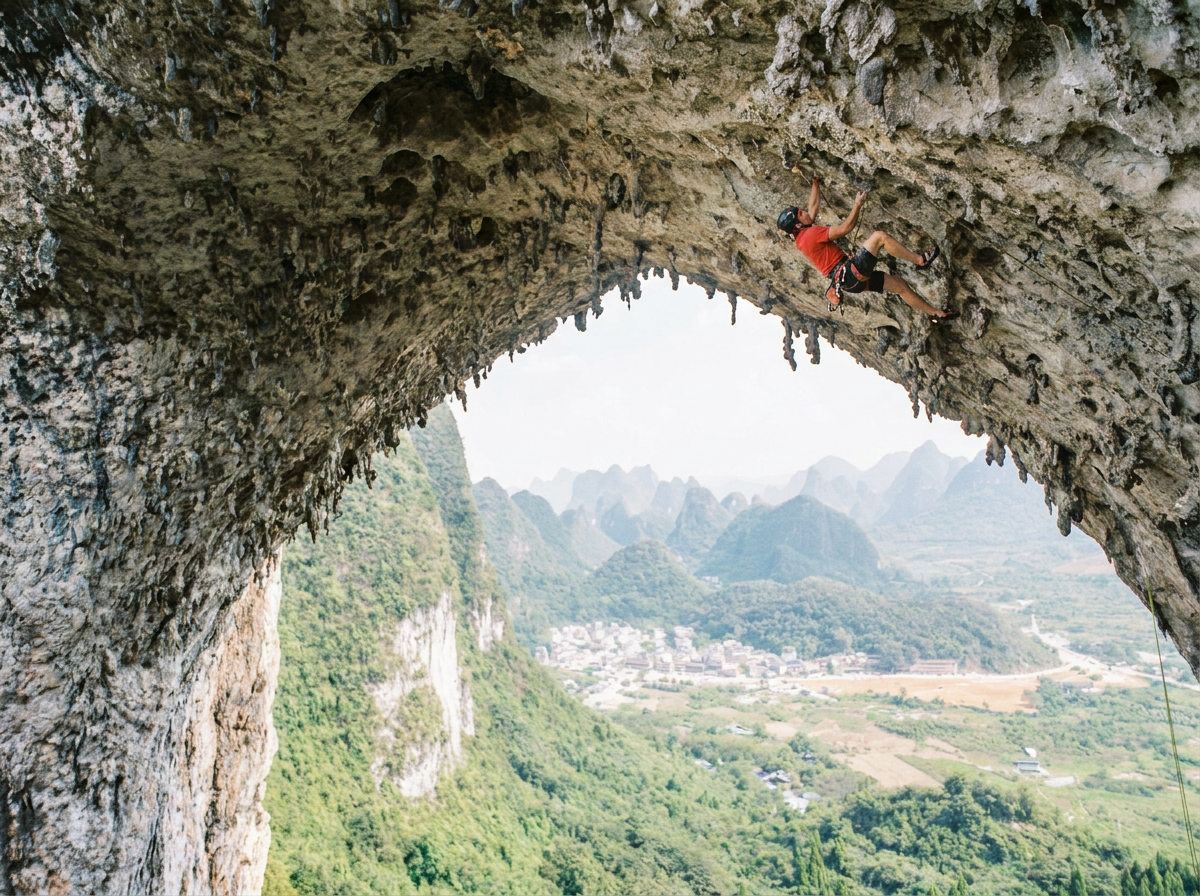
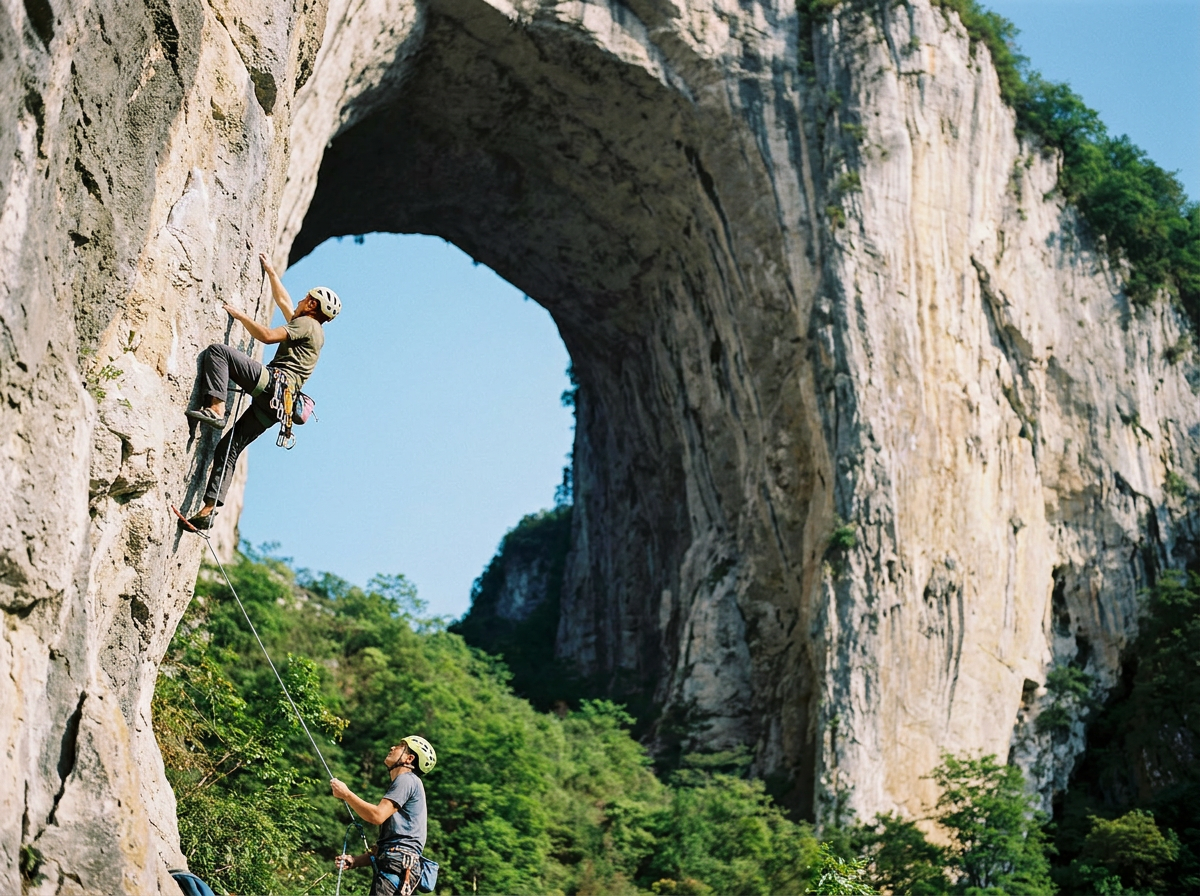
Getu Valley sits in Guizhou province, carved into dramatic karst cliffs and a massive natural arch that dominates the landscape. This region gained international attention after hosting major highline and climbing competitions, drawing top athletes from around the world.
Routes here tend toward steep, physical climbing on pocketed limestone, often overhanging enough to keep feet swinging free for long stretches. The natural arch itself creates a striking backdrop, with climbers visible from a distance against the pale gray rock.
The climbing here leans harder and more physical than most of the other spots on this list, better suited to climbers with solid technique and grip strength. Facilities remain more basic than Yangshuo, so visitors should arrange gear and accommodation before arriving, since options in the immediate area stay limited outside peak season.
Liming
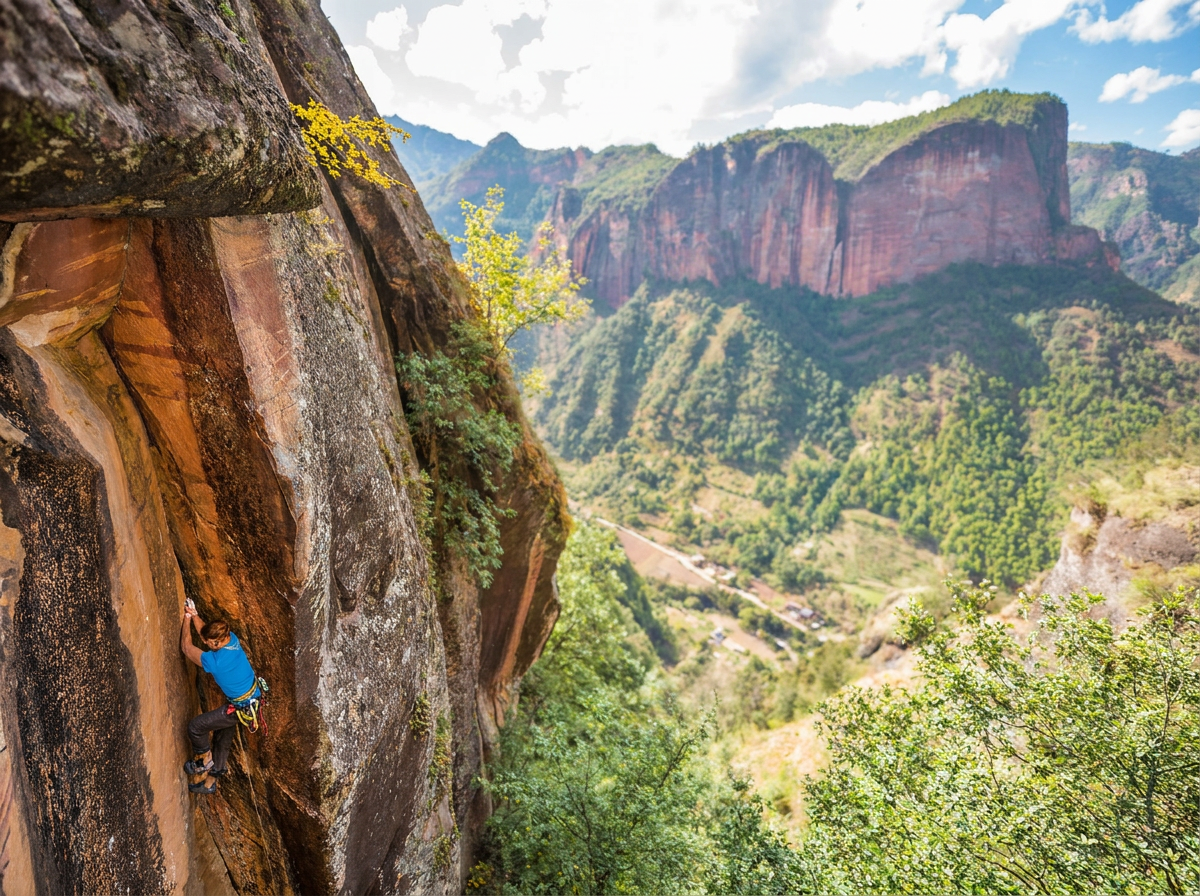
Liming sits in northwestern Yunnan, offering red sandstone big walls that stretch for hundreds of meters in places. The rock's color shifts dramatically with the light, turning a deep orange at sunset that draws photographers as often as climbers.
Multi-pitch routes dominate here, requiring different skills than the single-pitch sport climbing found at Yangshuo. Approaches often involve significant hiking through forest before reaching the base of a wall, adding a wilderness element missing from more developed climbing areas.
What separates Liming from the rest of this list is sheer scale — and the effort it takes just to reach the base of a wall. Fewer climbers make the trip, partly because reaching Liming requires a flight to Lijiang followed by several hours of driving. Those who do arrive typically describe the big wall climbing here as some of the most rewarding in the country.
Baihe Valley
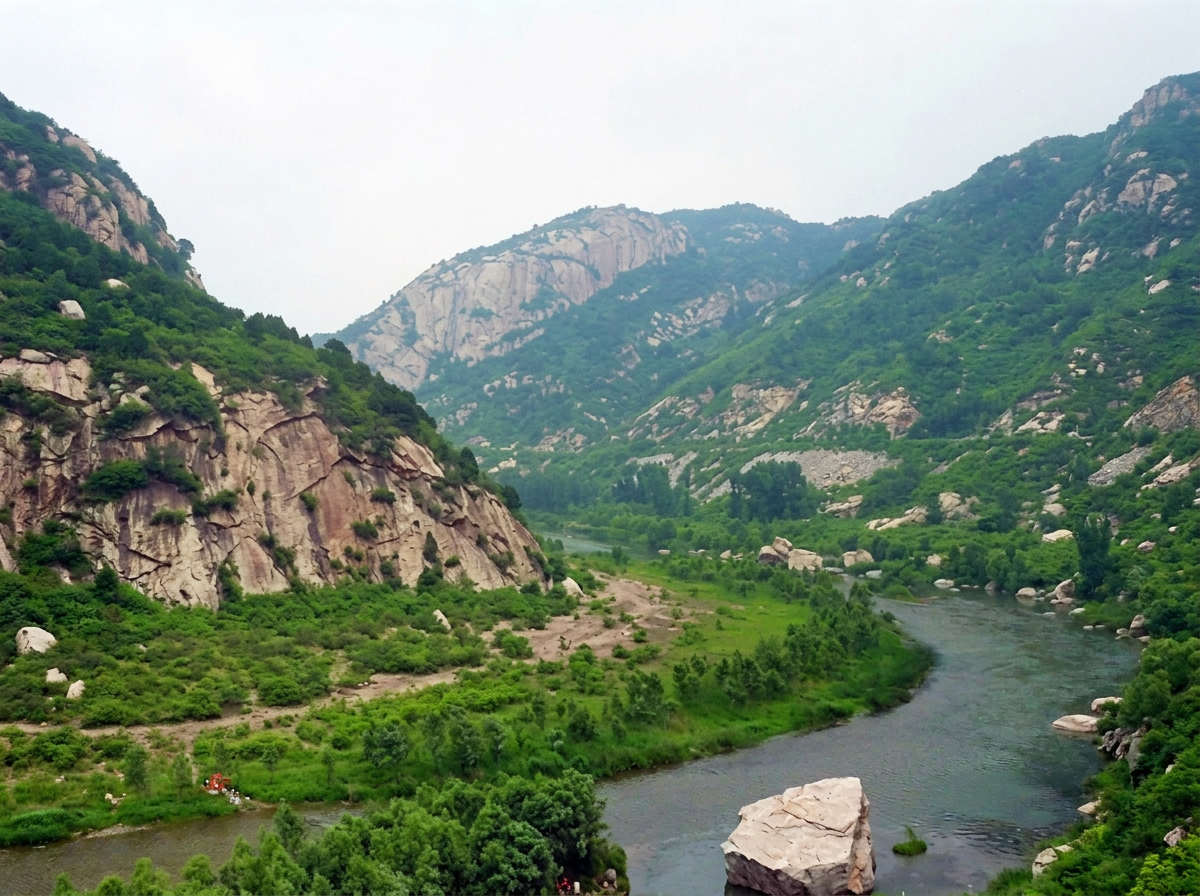
Situated within a comfortable driving distance from Beijing, Baihe Valley stands as the most convenient climbing destination for enthusiasts based in northern China. Towering granite cliffs overlook a tranquil river valley, presenting a diverse array of crack climbing and face routes that cater to a wide spectrum of skill levels.
A significant portion of the visitors are weekend warriors from Beijing, and the area has cultivated a dedicated local community over the years. Convenient camping spots located near the foot of the cliffs allow climbers to extend their stay for several days, eliminating the need for hotel accommodations.
For anyone based in the north who doesn't want to fly anywhere, Baihe is the rare spot on this list that delivers real route variety within a weekend's drive. Popular routes can become congested during spring and autumn weekends, so opting for weekday visits or starting early in the morning helps climbers bypass long queues at the base of established lines.
Lhasa
Lhasa presents a unique challenge for climbers who are prepared to merge high altitude with technical climbing demands. Duodi, a rural district north of Lhasa, holds the area's main concentration of bolted rock — most of it put up over the years by Tibetan mountaineering students and their coaches, who kept adding lines here starting around 2000. The rock now carries more than thirty routes spanning a wide enough range of grades that first-timers and seasoned climbers can both find something worth tying in for.
The environment here provides a perspective that few other climbing locations can replicate. Climbers frequently remark on the stunning view of the Potala Palace in the distance, noting that the thin mountain air significantly increases the physical difficulty of routes that would otherwise be considered moderate at sea level.
Local climbing clubs handle equipment rentals and guiding, which is what makes climbing at this altitude manageable at all without hauling in a full kit. It remains crucial to spend a few days acclimatizing in Lhasa before attempting serious climbs, as the city sits above three thousand meters. Those who take this precaution seriously typically find the experience far more rewarding than those who rush directly from the airport to the climbing area.
Planning a Climbing Trip in China
Seasonal changes impact nearly every region discussed in this guide. Spring and autumn generally provide the most stable weather conditions for rock climbing in China, whereas summer humidity in Yangshuo and Getu can render limestone holds slippery and unpredictable. Winter conditions often block access to higher-altitude routes in Yunnan and parts of Guizhou.
The availability of gear differs greatly depending on the location. Climbers arriving without equipment can easily rent ropes, harnesses, and shoes in Yangshuo and Baihe, where local shops cater to this need. In contrast, Getu and Liming require a higher degree of self-sufficiency, making it the safer option to bring personal gear.
The role of guides becomes more critical at remote or highly technical sites. Multi-pitch routes in Liming and high-altitude climbs near Lhasa benefit significantly from local expertise that is often missing from generic guidebooks. Securing a guide in advance, especially during peak season, helps avoid scheduling conflicts once climbers arrive at the destination.
Conclusion
Rock climbing in China encompasses a much wider variety of terrain than most international climbers recognize. From the bolted limestone towers of Yangshuo to the high-altitude challenges near Lhasa, each region offers a distinct climbing style influenced by local geology and geography. Climbers who take the time to research logistics and venture beyond the most famous destinations will discover routes that compete with the best climbing locations worldwide. For anyone serious about the sport, China warrants a much closer examination than it typically receives.